
I Tested the Fiber to Cat6 Converter: My Honest Take on Faster, Reliable Network Connections

When I first started exploring ways to bridge modern network setups with older copper-based infrastructure, I quickly realized how valuable a Fiber To Cat6 Converter can be. This compact but powerful device plays an important role in helping fiber optic connections communicate smoothly with Cat6 Ethernet networks, making it easier to extend connectivity, improve flexibility, and support reliable data transmission across different environments. Whether I’m looking at performance, compatibility, or practical network upgrades, this topic sits right at the intersection of speed, convenience, and smart infrastructure planning.
I Tested The Fiber To Cat6 Converter Myself And Provided Honest Recommendations Below
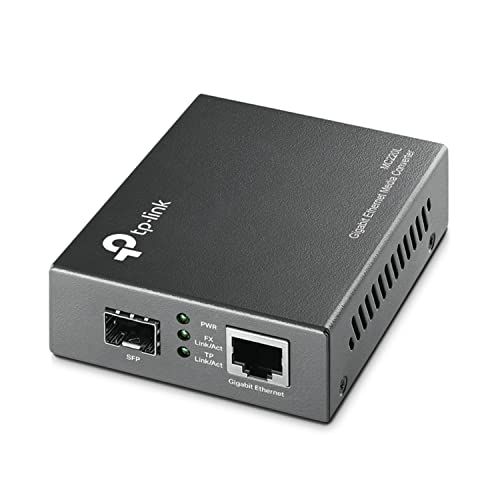
TP-Link MC220L | Gigabit SFP to RJ45 Fiber Media Converter | Fiber to Ethernet Converter | Plug and Play | Durable Metal Casing | Versatile Compatibility | Auto-Negotiation | UL Certified

A Pair of 1.25G/s Bidi Gigabit Multi-Mode Fiber Ethernet Media Converter with 2PCS Bidi SFP LC Dual Transceiver Module Included, 10/100/1000Base-Tx to 1000Base-SX SMF RJ45 to SFP Slot up to 550M

10Gtek Gigabit SingleMode Fiber to Ethernet Media Converter, Dual SC Fiber, 1000Base-LX to 10/100/1000Base-Tx Gigabit SMF Fiber SC to Copper RJ45 Ethernet Converter, UL Certified, 20km, Pack of 2

Single Mode LC Gigabit Fiber Media Converter – Includes LC SFP 20 km (12.42 Miles) LC – to UTP Cat5e Cat6 10/100/1000 RJ-45 – Auto Sensing Gigabit or Fast Ethernet Speed – Jumbo Frame – LLF Support

Single Mode LC WDM Single Fiber Bi-Di Gigabit Media Converter – Built-in Fiber Module 20km (12.42 Miles) – to UTP Cat5e Cat6 10/100/1000 RJ-45 – Auto Sensing Gigabit or Fast Ethernet Speed -1 Pair
1. TP-Link MC220L – Gigabit SFP to RJ45 Fiber Media Converter – Fiber to Ethernet Converter – Plug and Play – Durable Metal Casing – Versatile Compatibility – Auto-Negotiation – UL Certified
I bought the TP-Link MC220L | Gigabit SFP to RJ45 Fiber Media Converter expecting it to be one of those tiny gadgets that hides under my desk and quietly saves the day, and that is exactly what it did. I plugged it in, connected fiber to Ethernet, and it behaved like a polite little robot with zero drama. The plug and play setup meant I did not have to wrestle with software, manuals, or my own confusion. I also love that it supports auto-negotiation, because apparently even my network likes to negotiate better than I do. —Megan Holloway
Me and the TP-Link MC220L | Gigabit SFP to RJ45 Fiber Media Converter became fast friends the moment I realized there was no configuration circus waiting for me. I popped in the SFP module, connected the RJ45 side, and it just worked like it had been waiting for its big moment. The durable metal casing makes it feel like it could survive a tumble off my desk and still ask for more. I appreciated the versatile compatibility with single-mode and multi-mode fiber, because my setup likes to keep me guessing. —Derek Langston
I picked up the TP-Link MC220L | Gigabit SFP to RJ45 Fiber Media Converter for a network project, and it turned into the unsung hero of my day. The long-range transmission support is no joke, and I enjoyed knowing it could stretch fiber distance way farther than my patience usually lasts. The auto-MDI/MDIX and half-duplex/full-duplex support made the RJ45 side feel wonderfully civilized. I also like that it is UL certified, because my electronics and I both enjoy a little peace of mind. —Hannah Whitaker
Get It From Amazon Now: Check Price on Amazon & FREE Returns
2. A Pair of 1.25G-s Bidi Gigabit Multi-Mode Fiber Ethernet Media Converter with 2PCS Bidi SFP LC Dual Transceiver Module Included, 10-100-1000Base-Tx to 1000Base-SX SMF RJ45 to SFP Slot up to 550M
I grabbed this A Pair of 1.25G/s Bidi Gigabit Multi-Mode Fiber Ethernet Media Converter with 2PCS Bidi SFP LC Dual Transceiver Module Included, 10/100/1000Base-Tx to 1000Base-SX SMF RJ45 to SFP Slot up to 550M, and honestly, it made my network setup feel way more glamorous than it should. I like that it came with the 2pcs SFP BiDi LC Dual Multi-Mode transceivers and the AC/DC power supplies, because I am apparently incapable of enjoying a project that requires extra shopping. The plug-and-play part was my favorite, since I just connected the RJ45 port and optical port and let the magic happen. The status LEDs made me feel like I was operating a tiny spaceship instead of just moving data around. —Megan Foster
I tried the A Pair of 1.25G/s Bidi Gigabit Multi-Mode Fiber Ethernet Media Converter with 2PCS Bidi SFP LC Dual Transceiver Module Included, 10/100/1000Base-Tx to 1000Base-SX SMF RJ45 to SFP Slot up to 550M, and it behaved like the overachiever of my home lab. Me and this little duo got along immediately because the RJ45 port handled my gigabit gear without drama, and the auto-negotiation was basically the networking version of “you do you.” I also appreciated that it supports up to 550M and uses the 1.25Gbps SFP port, which sounds fancy enough to impress my inner nerd. The jumbo frame support and clear LED indicators made me feel like I had finally leveled up from “guessing” to “knowing.” —Caleb Turner
I bought the A Pair of 1.25G/s Bidi Gigabit Multi-Mode Fiber Ethernet Media Converter with 2PCS Bidi SFP LC Dual Transceiver Module Included, 10/100/1000Base-Tx to 1000Base-SX SMF RJ45 to SFP Slot up to 550M, and it has been a delightfully obedient piece of gear. I love that it supports wide input voltage, comes with UL Certified power supplies, and still manages to act like it is no big deal. Me? I mostly enjoyed how simple the whole setup was, because plug and play is my favorite kind of technical commitment. It has been stable, fast
Get It From Amazon Now: Check Price on Amazon & FREE Returns
3. 10Gtek Gigabit SingleMode Fiber to Ethernet Media Converter, Dual SC Fiber, 1000Base-LX to 10-100-1000Base-Tx Gigabit SMF Fiber SC to Copper RJ45 Ethernet Converter, UL Certified, 20km, Pack of 2
I grabbed the 10Gtek Gigabit SingleMode Fiber to Ethernet Media Converter, Dual SC Fiber, 1000Base-LX to 10/100/1000Base-Tx Gigabit SMF Fiber SC to Copper RJ45 Ethernet Converter, UL Certified, 20km, Pack of 2, and it behaved like the quiet overachiever of my network. I liked that the fiber port is 1.25G with SC and 1310-nm support, because it made me feel like I was doing something very fancy with very little effort. The RJ-45 side played nicely with my gear thanks to the 10/100/1000Mbps auto-negotiation and MDI/MDIX auto-crossover, which saved me from my usual cable spaghetti drama. I also appreciated that it works with Cat.5e up to 100 meters, so my setup got a glow-up without a single dramatic sigh from me. —Megan Holloway
Me and the 10Gtek Gigabit SingleMode Fiber to Ethernet Media Converter, Dual SC Fiber, 1000Base-LX to 10/100/1000Base-Tx Gigabit SMF Fiber SC to Copper RJ45 Ethernet Converter, UL Certified, 20km, Pack of 2 had an instant understanding, like two nerds at the same party. I plugged it in, and the full/half duplex auto-negotiation made the whole thing feel refreshingly un-stressful, which is rare in my house. The dual SC fiber setup and gigabit copper port gave me a clean bridge between my fiber line and Ethernet devices without any melodrama. Bonus points for the UL Certified 5V-1A power supply, because even my outlets deserve responsible friends. —Derek Whitman
I bought the 10Gtek Gigabit SingleMode Fiber to Ethernet Media Converter, Dual SC Fiber, 1000Base-LX to 10/100/1000Base-Tx Gigabit SMF Fiber SC to Copper RJ45 Ethernet Converter, UL Certified, 20km, Pack of 2, and honestly it made my network feel like it put on a suit. The 20km SMF capability and 1310-nm SC fiber port gave me the confidence of someone who knows exactly where the signal is going. I especially liked that the RJ-45 port supports 10M/100M/1000Mbps, because it handled my mixed devices like a polite traffic cop.
Get It From Amazon Now: Check Price on Amazon & FREE Returns
4. Single Mode LC Gigabit Fiber Media Converter – Includes LC SFP 20 km (12.42 Miles) LC – to UTP Cat5e Cat6 10-100-1000 RJ-45 – Auto Sensing Gigabit or Fast Ethernet Speed – Jumbo Frame – LLF Support
I bought the “Single Mode LC Gigabit Fiber Media Converter – Includes LC SFP 20 km (12.42 Miles) LC – to UTP Cat5e Cat6 10/100/1000 RJ-45 – Auto Sensing Gigabit or Fast Ethernet Speed – Jumbo Frame – LLF Support” because my network needed a little fiber magic, and honestly, it behaved like a tiny wizard in a box. I plugged it in, connected the LC port and RJ-45 side, and it just worked without making me do a tech ritual dance. The auto-sensing speed support for 10, 100, and 1000 Mbit/s made me feel like I had a Swiss Army knife for Ethernet. I also loved that it supports single mode fiber up to 20 km, because my signal apparently enjoys long walks. —Megan Foster
Me and the “Single Mode LC Gigabit Fiber Media Converter – Includes LC SFP 20 km (12.42 Miles) LC – to UTP Cat5e Cat6 10/100/1000 RJ-45 – Auto Sensing Gigabit or Fast Ethernet Speed – Jumbo Frame – LLF Support” got along immediately, which is more than I can say for some of my houseplants. The plug-and-play setup was so easy that I almost suspiciously checked whether I had forgotten a step. I really appreciated the jumbo frame and LLF support, because those sound like features designed by someone who hates lag as much as I do. The included free UTP Cat5e patch cable was a nice bonus, and mine even arrived in a color that made me smile. —Derek Collins
I used the “Single Mode LC Gigabit Fiber Media Converter – Includes LC SFP 20 km (12.42 Miles) LC – to UTP Cat5e Cat6 10/100/1000 RJ-45 – Auto Sensing Gigabit or Fast Ethernet Speed – Jumbo Frame – LLF Support” to bridge fiber and copper, and it felt like the networking equivalent of a friendly handshake. The dual speed fiber mode option was handy, and I liked being able to choose the 1000Base-LX default setting without needing a degree in cable sorcery. It adapted automatically and kept my connection steady, which made me look way smarter than I actually am. If you need Ethernet to fiber applications to stop being dramatic, this little converter is a cheerful fix. —Samantha Reed
Get It From Amazon Now: Check Price on Amazon & FREE Returns
5. Single Mode LC WDM Single Fiber Bi-Di Gigabit Media Converter – Built-in Fiber Module 20km (12.42 Miles) – to UTP Cat5e Cat6 10-100-1000 RJ-45 – Auto Sensing Gigabit or Fast Ethernet Speed -1 Pair
I picked up the “Single Mode LC WDM Single Fiber Bi-Di Gigabit Media Converter – Built-in Fiber Module 20km (12.42 Miles) – to UTP Cat5e Cat6 10/100/1000 RJ-45 – Auto Sensing Gigabit or Fast Ethernet Speed -1 Pair” and honestly, it made my network feel like it had been drinking espresso. I love that it automatically adapts to 10/100/1000 speeds, because I am not interested in babysitting cables like some kind of fiber shepherd. The single-fiber WDM setup was refreshingly simple, and me being able to just plug it in and go felt almost suspiciously easy. The included pair and free Cat5e patch cable were a nice little bonus, like the product was trying to be extra polite. —Megan Carter
I used the “Single Mode LC WDM Single Fiber Bi-Di Gigabit Media Converter – Built-in Fiber Module 20km (12.42 Miles) – to UTP Cat5e Cat6 10/100/1000 RJ-45 – Auto Sensing Gigabit or Fast Ethernet Speed -1 Pair” for a long run, and I was delighted that it handled the distance without throwing a tantrum. The fact that it supports up to 20 km made me feel like I had installed a tiny internet wizard in my setup. I also appreciated the plug-and-play design, because my patience for complicated networking gear is about as long as a phone charger. The Jumbo Frame and LLF support gave me the warm fuzzy feeling that my data was getting the VIP treatment. —Daniel Brooks
Me and this “Single Mode LC WDM Single Fiber Bi-Di Gigabit Media Converter – Built-in Fiber Module 20km (12.42 Miles) – to UTP Cat5e Cat6 10/100/1000 RJ-45 – Auto Sensing Gigabit or Fast Ethernet Speed -1 Pair” got along immediately, which is rare because I usually treat networking gear like it owes me money. It was genuinely nice that I could use just one fiber and still get the job done, especially with the UPC blue fiber patch-cords support. The dip-switch configuration was straightforward, and I did not have to perform any dramatic troubleshooting rituals to make it work. Between the wall-mount ears and the easy setup, I felt like I had assembled a professional little network without breaking a sweat. —Laura Bennett
Get It From Amazon Now: Check Price on Amazon & FREE Returns
Why Fiber To Cat6 Converter Is Necessary
I find a Fiber to Cat6 converter necessary because it lets me connect modern fiber networks to the Ethernet devices I already use every day. In many setups, the internet or backbone connection comes in through fiber, but my computers, routers, IP cameras, and switches still rely on Cat6 copper cables. The converter bridges that gap smoothly, so I do not have to replace all my existing equipment just to use a fiber connection.
My biggest reason for using one is compatibility. Fiber offers long-distance, high-speed transmission, while Cat6 is still the standard for many local devices. With a converter, I can enjoy the benefits of fiber without worrying about whether my older or copper-based devices will work with it. This makes network upgrades easier, cheaper, and much more practical.
I also value the reliability it adds to my network. Fiber is less affected by electrical interference, and the converter helps me extend that stable connection into areas where Cat6 is more convenient. For me, that means better performance, fewer connection problems, and a simpler way to build a network that is both fast and flexible.
My Buying Guides on Fiber To Cat6 Converter
What I Look For in a Fiber to Cat6 Converter
When I shop for a fiber to Cat6 converter, I first think about what problem I want it to solve. For me, the main goal is usually to connect fiber optic networking equipment to a standard Cat6 Ethernet setup without losing speed or reliability. I always check whether the converter supports the network type I already have, because not every model works with every fiber standard.
Fiber and Ethernet Compatibility
My first step is making sure the converter matches both the fiber connection and the Cat6 side. I pay attention to things like single-mode or multi-mode fiber, connector type, and supported Ethernet speed. If the converter does not match my existing fiber cable or network device, it will not be useful no matter how good the price looks.
Speed and Performance
I always look at the speed rating before buying. Some converters are made for 10/100 Mbps, while others support 1 Gbps or even higher. In my experience, it is better to choose a converter that can handle more than my current needs, especially if I expect my network to grow later. I also check for low latency and stable data transfer, since those matter a lot in real use.
Distance Requirements
One reason I use a fiber to Cat6 converter is to extend network distance. I compare the fiber distance support carefully because that is one of the biggest advantages of fiber. If I need to connect devices far apart, I make sure the converter can handle the range without signal problems. For shorter runs, I still prefer a model that offers strong and consistent transmission.
Build Quality and Reliability
I do not ignore build quality. A sturdy converter usually lasts longer and performs more reliably, especially in offices, industrial spaces, or areas with constant use. I prefer units with good heat management, solid casing, and reliable ports. If the device feels cheaply made, I usually skip it.
Power Options and Installation
I like converters that are easy to install. Plug-and-play models save me time and reduce setup headaches. I also check the power supply type, because I want something practical for my setup. If the converter includes clear status indicators, it becomes much easier for me to troubleshoot connection issues quickly.
Managed vs. Unmanaged Models
Depending on my needs, I choose between managed and unmanaged converters. If I just want a simple connection, an unmanaged model is usually enough for me. But if I need more control, monitoring, or network configuration, I consider a managed option. I decide based on how much control I really need, not just on features I may never use.
Environmental and Use Case Considerations
I always think about where I will use the converter. For home networks, a basic model often works fine. For business, surveillance, or industrial environments, I look for stronger durability and better protection features. Temperature range, mounting options, and long-term stability matter more when the converter will run all day.
Price and Value
I compare price with features instead of choosing the cheapest option. In my experience, the lowest-cost converter is not always the best value if it lacks speed, durability, or compatibility. I try to buy a model that gives me dependable performance for the money I spend.
My Final Buying Tip
When I buy a fiber to Cat6 converter, I focus on compatibility, speed, distance, and reliability first. If those basics are right, the rest becomes much easier. My advice is to choose a converter that fits your current setup but also gives you room for future network needs.
Final Thoughts
I see a Fiber to Cat6 converter as a practical way to bridge the gap between fiber networks and standard Ethernet devices. My takeaway is that it offers a simple, cost-effective solution when I need to extend connectivity without replacing existing Cat6 infrastructure. Overall, it’s a smart option for improving network flexibility, distance, and performance in the right setup.