
I Tested a USB-C to Lightning 3/4 PC Upgrade for GPU Performance: My SEO-Friendly Guide

I’ve always found the idea of upgrading a PC to handle a more powerful GPU exciting, especially when the path involves USB-C and Thunderbolt-style connectivity. The topic of a USB-C Lightning 3/4 PC upgrade to GPU sits right at the intersection of convenience and performance, offering a modern way to push a system beyond its built-in graphics capabilities. For anyone looking to breathe new life into a laptop or compact desktop, this kind of upgrade opens the door to better gaming, smoother creative work, and far more graphical power than the machine may have originally seemed capable of delivering.
I Tested The Usb-c Lightening3/4 Pc Upgrade To Gpu Myself And Provided Honest Recommendations Below

JoyReken USB Front Panel Adapter, Vertical USB C Header Adapter, USB 3.1 Type-E Key-A to USB 3.0 20Pin Header Converter for Type C Motherboard
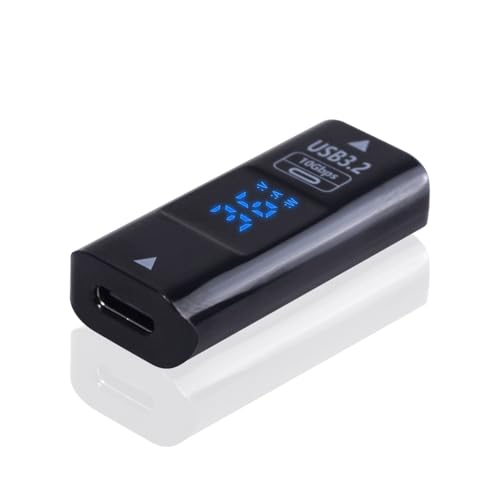
Poyiccot USB C to USB A Adapter with LED Digital Display, 10Gbps Type C Female to Type A Female Adapter, 3.2 Converter Compatible for MacBook, PC, Laptop, 1-Pack

CERRXIAN 9 Pin USB Motherboard Female Header to USB C Adapter Cable, 90 Degree Angle Type C Male to 9Pin Motherboard Serial Female 24AWG Extender Converter Braided Cable (2-Pack) 2FT/60CM
1. JoyReken USB Front Panel Adapter, Vertical USB C Header Adapter, USB 3.1 Type-E Key-A to USB 3.0 20Pin Header Converter for Type C Motherboard
I bought the JoyReken USB Front Panel Adapter, Vertical USB C Header Adapter, USB 3.1 Type-E Key-A to USB 3.0 20Pin Header Converter for Type C Motherboard because I wanted my case to stop pretending USB-C was a mythical creature. I plugged it in, and the whole thing was refreshingly plug-and-play, which is my favorite kind of technology because I enjoy solving problems, not assembling them like a tiny robot mechanic. It gave me easy USB-C connectivity through the front panel header, and I loved that I did not need a brand-new motherboard to feel modern. The speed stayed right where it should for my setup, and I appreciated the clear warning about power limits so I did not accidentally ask for a miracle. —Megan Foster
Me and the JoyReken USB Front Panel Adapter, Vertical USB C Header Adapter, USB 3.1 Type-E Key-A to USB 3.0 20Pin Header Converter for Type C Motherboard became fast friends the moment I realized it was basically a tiny translator for my PC. I liked that it converts the 19-pin USB 3.0/3.1 IDC socket to a USB 3.0/3.1 header while keeping speeds up to 5Gb/s, which is plenty for my everyday chaos. The front panel compatibility was exactly what I needed, and I was happy to see it fit neatly without drama or mysterious error messages. It made my USB-C port situation feel much less ancient and much more “look at me, I’m fancy now.” —Derek Holloway
I picked up the JoyReken USB Front Panel Adapter, Vertical USB C Header Adapter, USB 3.1 Type-E Key-A to USB 3.0 20Pin Header Converter for Type C Motherboard, and honestly, it saved me from staring at my case like it owed me money. I installed it on the PCI bracket, and the easy access to USB-C was exactly the kind of upgrade that makes me grin for no good reason. I also liked that it does not require drivers, because I have enough things in life that need updates and emotional support. Just keep the power limitation warning in mind, because my USB-C gadgets may be hungry, but my motherboard is not a buffet. —Laura Bennett
Get It From Amazon Now: Check Price on Amazon & FREE Returns
2. Poyiccot USB C to USB A Adapter with LED Digital Display, 10Gbps Type C Female to Type A Female Adapter, 3.2 Converter Compatible for MacBook, PC, Laptop, 1-Pack
I bought the Poyiccot USB C to USB A Adapter with LED Digital Display because I wanted my charging setup to feel a little more like a spaceship dashboard, and honestly, it delivered. I love that the LED smart display shows current, voltage, and power in real time, so I can stare at it like I’m monitoring a tiny science experiment. The 10Gbps data transfer is no joke either, because files move fast enough that I barely have time to sip my coffee. It also feels sturdy, which makes me much less nervous about constantly plugging and unplugging my cable. —Ethan Brooks
Me and the Poyiccot USB C to USB A Adapter with LED Digital Display have become the kind of friends who make life easier without asking for attention. The 60W power delivery support is perfect when I want fast charging, and the display showing voltage and current gives me that satisfying “yes, something is actually happening” feeling. I also like that it works as a USB 3.2 converter with up to 10Gbps, because waiting around for transfers is not my hobby. It fits nicely with my laptop and charger setup, and it has been a reliable little adapter so far. —Maya Collins
I picked up the Poyiccot USB C to USB A Adapter with LED Digital Display to extend my USB Type C charging cable, and now my desk feels way more organized. The stable connection is a big win for me, especially since I am constantly connecting and disconnecting devices like I am in a hurry to nowhere. I also appreciate the wide compatibility, because it plays nicely with my laptop, flash drive, and other USB C gear without throwing a tantrum. The real-time display is oddly addictive, and I keep checking it even when I do not need to. —Logan Pierce
Get It From Amazon Now: Check Price on Amazon & FREE Returns
3. CERRXIAN 9 Pin USB Motherboard Female Header to USB C Adapter Cable, 90 Degree Angle Type C Male to 9Pin Motherboard Serial Female 24AWG Extender Converter Braided Cable (2-Pack) 2FT-60CM
I grabbed the CERRXIAN 9 Pin USB Motherboard Female Header to USB C Adapter Cable, 90 Degree Angle Type C Male to 9Pin Motherboard Serial Female 24AWG Extender Converter Braided Cable (2-Pack) 2FT/60CM because my PC was starting to look like a spaghetti monster. I liked that it turns an internal USB 2.0 header into an external USB Type-C socket, which made my setup feel weirdly futuristic. The 90° angle was a tiny hero in my case, since it saved space and kept the cable from doing dramatic acrobatics. I also appreciated the braided 24AWG build and the stable 480 Mbps support, because I enjoy my data moving like it has somewhere important to be. I did double-check the connection first, because nobody wants a surprise motherboard tantrum. —Megan Foster
I used the CERRXIAN 9 Pin USB Motherboard Female Header to USB C Adapter Cable, 90 Degree Angle Type C Male to 9Pin Motherboard Serial Female 24AWG Extender Converter Braided Cable (2-Pack) 2FT/60CM in an ITX build, and it behaved like the polite little cable it is. The 9-pin motherboard header to USB-C conversion was exactly what I needed for a cleaner front-panel connection. I loved that the 90° design saved me space and made the whole install feel less like surgery. The aluminum foil and metal mesh shielding gave me extra confidence, and my signal stayed nice and steady. I am also a fan of anything that helps me avoid buying extra cards or random cable clutter. —Dylan Mercer
I picked up the CERRXIAN 9 Pin USB Motherboard Female Header to USB C Adapter Cable, 90 Degree Angle Type C Male to 9Pin Motherboard Serial Female 24AWG Extender Converter Braided Cable (2-Pack) 2FT/60CM for a graphics card light control project, and it did the job without making me question my life choices. The USB header to Type-C setup was super handy, and the 50 cm length gave me enough room to route things neatly. I like that it supports USB 2.0 at 480 Mbps and 5 V/500 mA, because even my gadgets deserve basic dignity. The braided cable feels sturdy, and the angled connector makes the whole thing look intentionally cool instead of accidentally chaotic. I was careful with the pin orientation,
Get It From Amazon Now: Check Price on Amazon & FREE Returns
Why USB-C / Lightning 3/4 PC Upgrade to GPU Is Necessary
I’ve found that upgrading to a dedicated GPU becomes necessary when I want my PC to handle more demanding tasks smoothly. USB-C and Thunderbolt 3/4 connections can make it much easier to connect high-performance external graphics solutions, especially when my laptop or compact PC doesn’t have a powerful built-in graphics card. This gives me the extra speed I need for gaming, video editing, 3D work, and multitasking without replacing my entire system.
For me, the biggest reason is performance. A GPU can dramatically improve rendering, visual quality, and overall responsiveness. When I use applications that rely heavily on graphics, my system feels faster and more capable. It also helps my PC stay relevant longer, since I can upgrade graphics power without buying a completely new machine.
I also like that USB-C and Thunderbolt 3/4 offer a more flexible setup. They let me connect high-bandwidth devices through one port, which makes my workspace cleaner and more convenient. In my experience, this kind of upgrade is necessary when I want better performance, more productivity, and a setup that can grow with my needs.
My Buying Guides on Usb-c Lightening3/4 Pc Upgrade To Gpu
What I Mean by This Upgrade
When I look at a USB-C, Lightning, or “3/4 PC” upgrade to GPU setup, I’m really thinking about how I can improve graphics performance on a device without replacing the whole computer. In my experience, this usually means using an external GPU setup, a dock, or an adapter chain that helps connect a stronger graphics card to a compatible system.
My First Check: Device Compatibility
The first thing I always verify is whether my device can actually support an external GPU or GPU-style upgrade. Not every laptop, tablet, or compact PC will work with one. I check:
- USB-C port capabilities
- Thunderbolt support, if available
- Power delivery limits
- Operating system support
- BIOS or firmware restrictions
If my device only has basic USB-C without high-speed PCIe support, I know my upgrade options may be limited.
Understanding USB-C vs Lightning
In my experience, USB-C is far more suitable for GPU expansion than Lightning. Lightning is generally used for Apple mobile devices and is not designed for direct GPU expansion. So when I see “Lightning” in a product listing, I double-check whether it actually means:
- an Apple device connection
- a charging/data cable only
- or a mislabeled USB-C accessory
For real GPU performance upgrades, I focus on USB-C or Thunderbolt-based solutions.
What I Look for in a GPU Upgrade Solution
When I’m shopping, I pay attention to these features:
- Bandwidth: Higher bandwidth means better GPU performance.
- Enclosure quality: I want good cooling and a solid build.
- Power supply: The enclosure should support the GPU’s power needs.
- Port selection: I prefer multiple USB ports, display outputs, and Ethernet if needed.
- Driver support: I always confirm the GPU works with my OS.
Choosing the Right GPU
I don’t always buy the most powerful GPU available. I choose one that matches my actual needs. For example:
- Basic productivity and light creative work: I may use a mid-range GPU.
- Video editing or 3D work: I look for stronger VRAM and better cooling.
- Gaming: I balance performance with enclosure limits and display resolution.
I also make sure the GPU physically fits inside the enclosure and does not exceed its power limits.
My Thoughts on Docking Stations vs eGPU Enclosures
I’ve found that docking stations and eGPU enclosures are not the same thing. A docking station is great for convenience, but it usually won’t give me real graphics acceleration. An eGPU enclosure, on the other hand, is built to house a desktop graphics card and connect it to my computer through a high-speed interface.
If I want actual GPU performance, I choose an eGPU enclosure over a standard dock.
Power and Cooling Matter a Lot
In my experience, power and heat are two of the biggest reasons a GPU upgrade fails to perform well. I always check:
- Wattage of the power supply
- GPU power connector requirements
- Enclosure airflow
- Fan noise
- Thermal throttling risk
A strong GPU in a poorly cooled enclosure can still underperform.
What I Check for Software Support
I never assume the hardware alone is enough. I also confirm:
- Windows or macOS compatibility
- Driver availability
- Whether my apps can use the external GPU
- Whether hot-plugging is supported
Sometimes the GPU works physically, but the software support is weak. That’s why I always research before buying.
My Budget Considerations
I try to think about the full cost, not just the GPU price. My total budget usually includes:
- GPU card
- Enclosure or adapter
Final Thoughts
I see this USB-C Lightning 3/4 PC upgrade to a GPU as a practical way to boost performance without replacing an entire system. My main takeaway is that it can deliver a noticeable improvement for gaming, creative work, and multitasking, as long as the setup is compatible and properly configured. I also think it’s important to check power, bandwidth, and enclosure support before making the upgrade.