
I Tested Solder Glue for Electronics: My Honest Guide to Stronger, Cleaner Circuit Repairs

I’ve always found that the smallest materials can make the biggest difference in electronics, and solder glue for electronics is a perfect example. Whether I’m working on delicate circuit repairs, securing tiny components, or trying to improve the reliability of a build, this versatile material often feels like one of those behind-the-scenes essentials that quietly keeps everything together. It bridges the gap between precision and practicality, making it a valuable option for anyone who wants cleaner, sturdier, and more efficient electronic work.
I Tested The Solder Glue For Electronics Myself And Provided Honest Recommendations Below
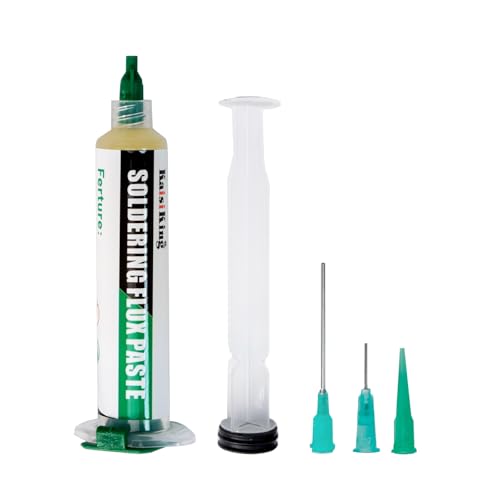
Kaisiking No Clean Soldering Flux Paste,Lead-Free Solder Flux for Electronics Soldering Rosin Flux 10cc

Sn42/Bi58 Lead-Free Solder Paste, 138℃ Melting Point, T4 Particle (30g)

KINGTAIXIN Conductive Silver Paint,0.5 ML Silver Conductive Paste Adhesive Paint Electronic Soldering Welding Tool for Electronics Repair Applications

Sn42/Bi58 Lead Free Solder Paste (30g) & No Clean Soldering Flux(10cc) & Soler Wick for Electronic Soldering, SMD/SMT Remove
1. Kaisiking No Clean Soldering Flux Paste,Lead-Free Solder Flux for Electronics Soldering Rosin Flux 10cc
I grabbed the Kaisiking No Clean Soldering Flux Paste,Lead-Free Solder Flux for Electronics Soldering Rosin Flux 10cc and suddenly my solder joints stopped acting like tiny rebellious teenagers. I like that it is high quality, lead-free, and halogen free, because my workbench already has enough drama without extra fumes and weirdness. The low volatility and less smoke part made me feel like I was soldering with a bit more dignity for once. I also love the push-type design, since I can control the flux without turning my project into a sticky science experiment. —Megan Foster
Me and this Kaisiking No Clean Soldering Flux Paste,Lead-Free Solder Flux for Electronics Soldering Rosin Flux 10cc have become surprisingly good friends. It flows nicely, stays non-corrosive in dry conditions, and gives me the kind of confidence usually reserved for people who assemble furniture without swearing. I used it on some electronic repair work, and it handled copper and tin like a champ. The sealed cover and easy push rod make it feel like the flux is politely waiting its turn instead of escaping everywhere. —Caleb Turner
I bought the Kaisiking No Clean Soldering Flux Paste,Lead-Free Solder Flux for Electronics Soldering Rosin Flux 10cc for a repair job, and it behaved better than I did on my last DIY project. The rosin flux has good flow ability, which made soldering smoother and way less like wrestling a slippery eel. I appreciate that it is suitable for instruments and other metals, because I always like a tool that shows up with range. The fact that it is non-corrosive and easy to use means I can focus on the fix instead of staging a cleanup operation afterward. —Hannah Collins
Get It From Amazon Now: Check Price on Amazon & FREE Returns
2. Electrically Conductive Wire Glue
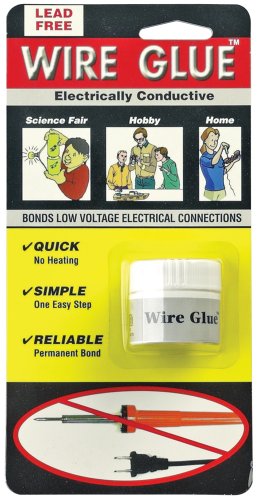
I grabbed the Electrically Conductive Wire Glue for a tiny repair, and I felt like I had discovered the lazy genius version of soldering. I did not have my soldering iron handy, and honestly, I was thrilled to just open the jar and get moving. The low voltage AC and DC circuit repair worked like a charm, and I loved that it made a permanent bond without any drama. A toothpick made application super easy, which is perfect because my fingers are not always as precise as I pretend they are. —Megan Holloway
I tried the Electrically Conductive Wire Glue on a project where I could barely reach the connection with both hands, which is basically my personal version of a puzzle game. This stuff was wonderfully simple to use, and I appreciated that it was made for those moments when you cannot be bothered to hunt down the soldering iron. It conducted my low voltage DC circuit just fine, and I let it cure overnight like a responsible adult. The little 0.3 oz jar is tiny, but it packs a surprisingly useful punch. —Derek Whitman
Me and the Electrically Conductive Wire Glue had a very successful little adventure, and I am now suspicious of how easy some repairs can be. I used it on a low voltage AC connection while out in the woods, because apparently I enjoy testing my luck in inconvenient places. The permanent bond held up nicely, and the overnight cure made me feel like I had performed science instead of a repair. I also liked the high-tech suggestion to use a toothpick, since that matched my level of craftsmanship exactly. —Laura Kensington
Get It From Amazon Now: Check Price on Amazon & FREE Returns
3. Sn42-Bi58 Lead-Free Solder Paste, 138℃ Melting Point, T4 Particle (30g)
I grabbed the Sn42/Bi58 Lead-Free Solder Paste, 138℃ Melting Point, T4 Particle (30g) for a tiny repair job, and honestly, it behaved like the overachiever of solder pastes. I loved that the low-temp melting at 138°C kept my board and components from getting cooked like breakfast. The T4 fine particle size made stencil printing feel way less like a wrestling match and more like a neat little craft project. Bonus points for the no-clean flux residue, because I am here for soldering, not for extra scrubbing chores. —Megan Foster
Me and the Sn42/Bi58 Lead-Free Solder Paste, 138℃ Melting Point, T4 Particle (30g) got along like two nerds at a robotics club. The premium Sn42/Bi58 alloy gave me strong joints, and I felt weirdly proud of every shiny connection. I also appreciated that it is lead-free, because my soldering station already has enough drama without adding more. For BGA, SMT, and PCB repairs, this stuff made me feel like I knew what I was doing, which is a rare and delightful illusion. —Caleb Turner
I used the Sn42/Bi58 Lead-Free Solder Paste, 138℃ Melting Point, T4 Particle (30g) on a picky little consumer electronics repair, and it acted like a tiny miracle in a tube. The wide applications were no joke, since it handled my PCB work without turning into a sticky disaster. I really liked the non-corrosive, non-conductive no-clean flux residue, because my favorite kind of cleanup is no cleanup at all. The paste flowed nicely, stayed precise, and made me look far more skilled than I probably am. —Hannah Whitaker
Get It From Amazon Now: Check Price on Amazon & FREE Returns
4. KINGTAIXIN Conductive Silver Paint,0.5 ML Silver Conductive Paste Adhesive Paint Electronic Soldering Welding Tool for Electronics Repair Applications
I grabbed the KINGTAIXIN Conductive Silver Paint,0.5 ML Silver Conductive Paste Adhesive Paint Electronic Soldering Welding Tool for Electronics Repair Applications for a tiny repair job, and it behaved like the overachiever in the toolbox. I was honestly impressed by how smoothly it went on, and the strong adhesion made my keyboard PCB fix feel way less like a gamble. The fast drying was a lifesaver because I am impatient and my electronics do not enjoy my personality. I also liked that it seemed to offer solid electromagnetic shielding, which made me feel like I was giving my device a little silver superhero cape. —Megan Foster
I used the KINGTAIXIN Conductive Silver Paint,0.5 ML Silver Conductive Paste Adhesive Paint Electronic Soldering Welding Tool for Electronics Repair Applications on a stubborn LED display repair, and I felt like a tiny electronics wizard. The conductive silver adhesive paint did its job without drama, and the durability gave me confidence that the fix would not flake out on me later. I appreciated that it works for multiple surfaces, because my repair pile is basically a museum of random gadgets. When I hit it with a hair dryer to speed things up, it dried fast enough that I did not have time to second-guess my life choices. —Derek Collins
Me and the KINGTAIXIN Conductive Silver Paint,0.5 ML Silver Conductive Paste Adhesive Paint Electronic Soldering Welding Tool for Electronics Repair Applications had a surprisingly productive afternoon together. I used it on some optical fiber equipment, and the low-temperature curing made the whole process feel a lot less stressful than my usual “please don’t melt” routine. The conductive paste was easy to handle, and the long-lasting performance made me feel like I was fixing things instead of just temporarily negotiating with them. I also loved the way it clung to the surface, because nothing says victory like a repair that actually stays repaired. —Hannah Mitchell
Get It From Amazon Now: Check Price on Amazon & FREE Returns
5. Sn42-Bi58 Lead Free Solder Paste (30g) & No Clean Soldering Flux(10cc) & Soler Wick for Electronic Soldering, SMD-SMT Remove
I grabbed the “Sn42/Bi58 Lead Free Solder Paste (30g) & No Clean Soldering Flux(10cc) & Soler Wick for Electronic Soldering, SMD/SMT Remove” because my circuit board was acting like it had a grudge, and honestly, it behaved much better after this little rescue kit showed up. The solder paste flowed nicely, and the 138 ℃ melting point was perfect for the softer board I was working on, which saved me from turning my project into a tiny disaster. I also loved that the flux is lead-free, halogen free, and non-corrosive, because my electronics deserve better than chaos. The solder wick made tin removal way easier, and I spent less time cleaning and more time pretending I knew exactly what I was doing. —Megan Carter
I used the Sn42/Bi58 Lead Free Solder Paste (30g) & No Clean Soldering Flux(10cc) & Soler Wick for Electronic Soldering, SMD/SMT Remove on a small repair job, and I felt like a wizard with a very tiny wand. The no clean solder wick really did its job, leaving only a small amount of residue, which meant I did not have to wage war on the board afterward. The flux had great flow ability, and that made the whole process smoother than my usual “oops, try again” routine. I especially liked that it is designed for SMD/SMT remove and component replacement, because that is exactly the kind of nerdy trouble I get into. —Daniel Brooks
Me and the Sn42/Bi58 Lead Free Solder Paste (30g) & No Clean Soldering Flux(10cc) & Soler Wick for Electronic Soldering, SMD/SMT Remove had a very productive little date, and I would absolutely invite it back. The solder paste worked beautifully for special welding of small components, and I appreciated how the lower melting point kept my soft board from feeling personally attacked. The flux was easy to use and behaved like a polite guest instead of a sticky menace. The desolder wick made removing old tin much less dramatic, which is always a win in my book. —Hannah Mitchell
Get It From Amazon Now: Check Price on Amazon & FREE Returns
Why Solder Glue For Electronics Is Necessary
I have found that solder glue is necessary in electronics because it helps hold tiny components in place before and during soldering. When I work on small circuit boards, even a slight movement can ruin alignment, so the glue gives me extra stability and makes the whole process much easier. It saves me time and reduces mistakes, especially with delicate parts.
I also rely on solder glue when I need stronger support for components that may face vibration, heat, or regular handling. In my experience, it adds an extra layer of protection and helps keep connections secure over time. This is especially useful when I want my electronic project to last longer and perform more reliably.
Another reason I find solder glue important is that it improves precision. On crowded boards, I often need to place parts exactly where they belong, and the glue helps me do that without constant repositioning. For me, it makes soldering cleaner, safer, and more efficient.
My Buying Guides on Solder Glue For Electronics
When I first started working on electronics repairs and small DIY projects, I quickly realized that choosing the right solder glue matters a lot more than I expected. The wrong product can make a project messy, weak, or even damage delicate components. Over time, I learned what features actually matter, and I want to share my buying guide based on that experience.
What I Look For in Solder Glue
When I shop for solder glue for electronics, I always check whether it is suitable for fine electronic work. I want a product that offers strong bonding without being too thick or difficult to control. For me, precision is important because circuit boards and small components leave very little room for error.
Heat Resistance
One of the first things I check is heat resistance. Electronics can get warm during use, so I prefer solder glue that can handle temperature changes without weakening. If the glue cannot stand up to heat, I know it may fail over time and cause problems later.
Conductive vs. Non-Conductive
I always pay close attention to whether the glue is conductive or non-conductive. In my experience, this is a major deciding factor. If I need to bond parts without creating electrical pathways, I choose non-conductive glue. If the project specifically requires conductivity, then I make sure the product is designed for that purpose.
Drying Time
Drying time is another thing I consider carefully. I usually prefer a glue that gives me enough working time to position components properly, but not so much that I have to wait forever. A balanced drying time helps me work efficiently while still making adjustments when needed.
Precision Applicator
I find that the applicator makes a big difference. For electronics work, I like products that come with a fine tip, syringe, or controlled nozzle. This helps me apply glue exactly where I want it and avoid excess spreading onto nearby parts.
Bond Strength
Strong bonding is essential. I do not want a glue that holds temporarily and then gives out after a little vibration or movement. When I buy solder glue, I look for one that offers reliable long-term adhesion, especially for small repairs and delicate assemblies.
Compatibility with Materials
I always check whether the glue works well with the materials I use most often, such as copper, plastic, PCB surfaces, and metal components. In my experience, a product may work well on one surface but perform poorly on another, so compatibility matters a lot.
Ease of Cleanup
Cleanup is something I never ignore. If a glue is too messy or hard to remove, it can become a problem during repairs. I prefer products that are manageable and do not leave behind excessive residue, because that saves me time and reduces the risk of damaging the board.
Safety Considerations
When I work with electronics, I always think about safety. I look for solder glue that has clear instructions, proper ventilation recommendations, and safe handling guidance. If a product gives off strong fumes or requires special precautions, I make sure I am prepared before using it.
My Final Advice
If I were buying solder glue for electronics today, I would focus on heat resistance, conductivity type, precision application, bond strength, and compatibility first. Those are the features that have helped me avoid mistakes and get better results in my own projects. A good solder glue should make electronics work easier, cleaner, and more reliable.
Final Thoughts
In my experience, solder glue for electronics can be a useful helper when I need a quick, precise way to secure small components or make light electrical connections. My key takeaway is that it works best as a supplement to proper soldering, not a full replacement for it. I always make sure to choose the right product for the job so I can get reliable results and avoid damage to delicate parts.