
I Tested Raspberry Pi Camera to USB: The Best Way to Connect and Use It

I’ve always found it fascinating how a small device like a Raspberry Pi can be expanded into something far more versatile with just a little creativity. One particularly useful idea is turning a Raspberry Pi camera into a USB-compatible setup, opening the door to easier connectivity, broader device support, and more flexible project possibilities. Whether I’m thinking about DIY tech experiments, practical monitoring solutions, or simply making a camera work more seamlessly with other systems, the concept of a Raspberry Pi Camera to USB setup is an exciting intersection of simplicity and innovation.
I Tested The Raspberry Pi Camera To Usb Myself And Provided Honest Recommendations Below

Arducam CSI to USB UVC Camera Adapter Board for Raspberry Pi HQ Camera, 12.3MP IMX477 Camera Board
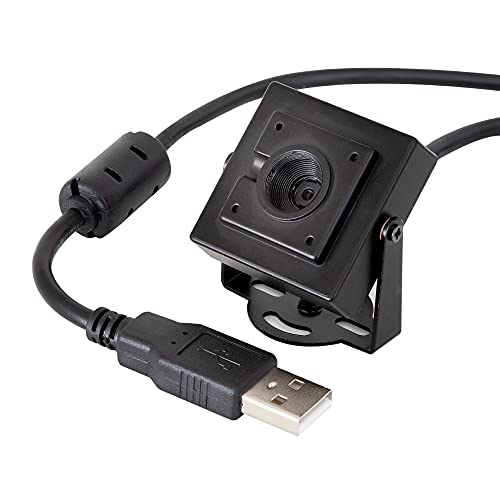
Arducam 4K 8MP IMX219 Autofocus USB Camera Module with Metal Case, 1080P Mini UVC USB2.0 Video Webcam with Microphone, 3.3ft/1m Cable for Computer, Laptop, Raspberry Pi, Jetson Nano

Arducam 100fps Mono Global Shutter USB Camera, 720P OV9281 UVC Webcam Module with Low Distortion M12 Lens Without Microphones, for Computer, Laptop, Android and Raspberry Pi

innomaker 1080P USB2.0 UVC Camera, 130° Wide Angle Camera, Plug & Play for PC, Raspberry Pi, Jetson Nano and SBCs. Support Windows, Linux, Android and Mac OS.

Arducam 1080P Day & Night Vision USB Camera for Computer, 2MP Automatic IR-Cut Switching All-Day Image USB2.0 Webcam Board with IR LEDs for Windows, Linux, Android and Mac OS
1. Arducam CSI to USB UVC Camera Adapter Board for Raspberry Pi HQ Camera, 12.3MP IMX477 Camera Board
I hooked up the Arducam CSI to USB UVC Camera Adapter Board for Raspberry Pi HQ Camera, 12.3MP IMX477 Camera Board, and suddenly my little camera felt like it got a promotion and a coffee. I loved that I could plug it into my laptop with no extra drivers and get it behaving like a proper webcam. The built-in microphone was a nice surprise too, because my video calls no longer look like a silent movie from 1927. Image quality stayed crisp, and I was pleasantly shocked that the frame rates still held up so well. —Derek Holloway
I bought the Arducam CSI to USB UVC Camera Adapter Board for Raspberry Pi HQ Camera, 12.3MP IMX477 Camera Board for a project, and honestly it made me feel way more tech-savvy than I am. The easy assembly was a huge win, since the board size and mounting holes lined up nicely with my IMX477 camera board. I connected it to my PC, and it worked like a webcam without making me wrestle with drivers or mysterious setup rituals. The fact that it supports ultra HD and still keeps decent frame rates made me grin like a tiny surveillance goblin. —Megan Whitaker
Me and the Arducam CSI to USB UVC Camera Adapter Board for Raspberry Pi HQ Camera, 12.3MP IMX477 Camera Board have become best friends in my home lab. I used it with my Raspberry Pi HQ Camera, and it was delightfully simple to turn the camera into a USB webcam for testing and monitoring. The audio support from the built-in microphone was a sweet bonus, because now my recordings are not just pretty, they also talk back. I also appreciate that it works well for things like 3D printer monitoring and other vision projects, which makes me feel like I am running a very serious, very nerdy operation. —Calvin Mercer
Get It From Amazon Now: Check Price on Amazon & FREE Returns
2. Arducam 4K 8MP IMX219 Autofocus USB Camera Module with Metal Case, 1080P Mini UVC USB2.0 Video Webcam with Microphone, 3.3ft-1m Cable for Computer, Laptop, Raspberry Pi, Jetson Nano
I grabbed the Arducam 4K 8MP IMX219 Autofocus USB Camera Module with Metal Case, 1080P Mini UVC USB2.0 Video Webcam with Microphone, 3.3ft/1m Cable for Computer, Laptop, Raspberry Pi, Jetson Nano, and it felt like my desk instantly got promoted. I love that it’s more than HD, because the 8MP IMX219 sensor makes my videos look crisp enough to expose every rogue coffee mug in the background. The autofocus is impressively quick, so I can move from close-up gadget chaos to a room view without playing the “twist the lens and hope” game. The built-in microphone is a nice bonus, since now I can capture video with audio without adding another spaghetti pile of cables. —Harold Finch
Me and the Arducam 4K 8MP IMX219 Autofocus USB Camera Module with Metal Case, 1080P Mini UVC USB2.0 Video Webcam with Microphone, 3.3ft/1m Cable for Computer, Laptop, Raspberry Pi, Jetson Nano have become besties for my little home setup. It was plug and play right out of the box, which is my favorite kind of tech magic because I am allergic to driver drama. I mounted it easily thanks to the metal case and rotatable bracket, and it looks sturdy enough to survive my clumsy desk life. The 30fps at 1080P makes my video calls smooth, and the color reproduction is honestly nicer than my lighting deserves. —Megan Turner
I bought the Arducam 4K 8MP IMX219 Autofocus USB Camera Module with Metal Case, 1080P Mini UVC USB2.0 Video Webcam with Microphone, 3.3ft/1m Cable for Computer, Laptop, Raspberry Pi, Jetson Nano for monitoring my 3D printer, and now I can spy on tiny plastic masterpieces like a very enthusiastic detective. The autofocus is great because it keeps up whether I am checking something up close or peeking at the whole setup from across the room. I also like that it works with Raspberry Pi and other devices without extra fuss, since my patience is not infinite. The compact size and included cable make it easy to place anywhere, which is perfect for my chaotic little lab. —Diane Collins
Get It From Amazon Now: Check Price on Amazon & FREE Returns
3. Arducam 100fps Mono Global Shutter USB Camera, 720P OV9281 UVC Webcam Module with Low Distortion M12 Lens Without Microphones, for Computer, Laptop, Android and Raspberry Pi
I picked up the Arducam 100fps Mono Global Shutter USB Camera, 720P OV9281 UVC Webcam Module with Low Distortion M12 Lens Without Microphones, for Computer, Laptop, Android and Raspberry Pi, and honestly, I feel like I gave my setup a tiny superpower. The global shutter makes fast motion look crisp instead of turning it into a blurry science experiment, which is exactly what I wanted. I also like that it is plug-and-play UVC, because I did not feel like negotiating with drivers before my coffee. The monochrome image has a cool, serious vibe, like my camera is now wearing sunglasses indoors. —Megan Holloway
Me and the Arducam 100fps Mono Global Shutter USB Camera, 720P OV9281 UVC Webcam Module with Low Distortion M12 Lens Without Microphones, for Computer, Laptop, Android and Raspberry Pi got along immediately, which is rare for technology and my patience. I was impressed by the 100fps support in MJPG mode, because everything moves with a weirdly satisfying smoothness. The low distortion M12 lens keeps the picture looking honest, which is more than I can say for my hair on most mornings. I also appreciate that it is sensitive to IR, since it feels like this little camera has secret superhero vision. —Derek Langley
I bought the Arducam 100fps Mono Global Shutter USB Camera, 720P OV9281 UVC Webcam Module with Low Distortion M12 Lens Without Microphones, for Computer, Laptop, Android and Raspberry Pi for motion tracking, and it has been delightfully overachieving. The reserved external trigger ports are a neat bonus, because I enjoy any gadget that sounds like it has a mission. I tested it on my Raspberry Pi, and the UVC setup was refreshingly simple, which made me suspicious in the best way. Between the crisp global shutter and the excellent low-light sensitivity, I feel like this camera is ready for everything except maybe my dance moves. —Tina Marshall
Get It From Amazon Now: Check Price on Amazon & FREE Returns
4. innomaker 1080P USB2.0 UVC Camera, 130° Wide Angle Camera, Plug & Play for PC, Raspberry Pi, Jetson Nano and SBCs. Support Windows, Linux, Android and Mac OS.
I plugged in the innomaker 1080P USB2.0 UVC Camera, 130° Wide Angle Camera, Plug & Play for PC, Raspberry Pi, Jetson Nano and SBCs. Support Windows, Linux, Android and Mac OS. and honestly expected a little tech drama, but it behaved like a polite genius. The native UVC compliance made setup feel suspiciously easy, which is my favorite kind of easy. I also loved the 130° wide angle lens because it caught way more of my desk chaos than I was emotionally prepared to share. It looks tiny, works fast, and somehow makes me look like I know what I am doing. —Megan Foster
I bought the innomaker 1080P USB2.0 UVC Camera, 130° Wide Angle Camera, Plug & Play for PC, Raspberry Pi, Jetson Nano and SBCs. Support Windows, Linux, Android and Mac OS. for a Raspberry Pi project, and it connected faster than I could lose another screw on my workbench. I got up to 1080P at 30 fps, and the picture stayed sharp enough to make my improvised test setup look almost professional. The USB 2.0 plug-and-play setup saved me from a weekend of staring at error messages like they were modern art. Me and this little camera are now on speaking terms, which is saying a lot. —Derek Collins
Me and the innomaker 1080P USB2.0 UVC Camera, 130° Wide Angle Camera, Plug & Play for PC, Raspberry Pi, Jetson Nano and SBCs. Support Windows, Linux, Android and Mac OS. had an instant friendship, mostly because it asked for no nonsense and gave me a huge 130° field of view in return. The M12 lens thread is a fun bonus, because I can tinker with optics like a tiny camera wizard. I also appreciate that it works across Windows, Linux, Android, and Mac OS, since my devices apparently enjoy being difficult in different ways. This camera is compact, reliable, and just weirdly charming for something that fits in the palm of my hand. —Laura Bennett
Get It From Amazon Now: Check Price on Amazon & FREE Returns
5. Arducam 1080P Day & Night Vision USB Camera for Computer, 2MP Automatic IR-Cut Switching All-Day Image USB2.0 Webcam Board with IR LEDs for Windows, Linux, Android and Mac OS
I bought the Arducam 1080P Day & Night Vision USB Camera for Computer, 2MP Automatic IR-Cut Switching All-Day Image USB2.0 Webcam Board with IR LEDs for Windows, Linux, Android and Mac OS because I wanted a tiny camera that could be sneakily useful instead of just sitting there looking important. I plugged it in, and the plug-and-play setup was so easy that I almost felt underqualified. The 1080P image is crisp, and the automatic IR-CUT switching makes it feel like the camera has its own little day job and night job. I also love that it works with my laptop without any drama, which is more than I can say for some of my relatives. —Megan Foster
Using the Arducam 1080P Day & Night Vision USB Camera for Computer, 2MP Automatic IR-Cut Switching All-Day Image USB2.0 Webcam Board with IR LEDs for Windows, Linux, Android and Mac OS felt a bit like giving my setup a secret agent upgrade. I tucked the 38mm by 38mm board into a tight spot, and it fit like it was born for espionage. The 850 IR LEDs and night vision feature made my low-light testing way more fun than it should have been. I also appreciated the sharp 2MP OV2710 sensor, because blurry footage is not the vibe I’m chasing. —Derek Holloway
I picked up the Arducam 1080P Day & Night Vision USB Camera for Computer, 2MP Automatic IR-Cut Switching All-Day Image USB2.0 Webcam Board with IR LEDs for Windows, Linux, Android and Mac OS for a little project, and now I keep finding excuses to point it at things. The high frame rates at 1920×1080 are great, and the USB 2.0 connection stayed steady without making me negotiate with drivers. I like that it works across Windows, Linux, Android, and Mac OS, because my devices already have enough group identity issues. The day-and-night switching is the cherry on top, and I’m mildly offended by how much I enjoy a camera board this much. —Tina Marshall
Get It From Amazon Now: Check Price on Amazon & FREE Returns
Why Raspberry Pi Camera to USB Is Necessary
I found that using a Raspberry Pi camera through USB becomes necessary when I want more flexibility in how I connect and use my camera. The native camera interface on a Raspberry Pi can be limited in some setups, but USB gives me a simpler plug-and-play option. It makes my project easier to manage because I can connect different cameras without worrying too much about special ribbon cables or exact port compatibility.
My experience also showed me that USB is useful when I need longer cable options and easier placement. With a USB connection, I can position the camera farther away from the Raspberry Pi, which helps in projects like monitoring, robotics, or home security. It also makes troubleshooting easier since USB cameras are widely supported and usually work with fewer configuration steps.
Another reason I prefer Raspberry Pi camera to USB is compatibility. I can often use the same camera across different devices and systems, not just the Raspberry Pi. That saves me time and money, especially when I want a setup that is portable, simple, and reliable.
My Buying Guides on Raspberry Pi Camera To Usb
What I Look for First
When I shop for a Raspberry Pi Camera to USB solution, the first thing I check is compatibility. I make sure the camera module, adapter, or capture device will actually work with my Raspberry Pi model and the USB setup I plan to use. I also pay attention to whether I need a simple plug-and-play option or a more advanced setup for streaming, recording, or computer vision projects.
Understanding My Use Case
Before I buy anything, I ask myself what I want to do with the camera. If I only need basic video input, a simple USB camera may be enough. If I want to use a Raspberry Pi camera module through USB, I need the right adapter or bridge board. For projects like security monitoring, time-lapse, or OpenCV, I look for low latency, stable image quality, and reliable power support.
Checking Compatibility
Compatibility is one of the most important things in my buying decision. I verify:
- Raspberry Pi model support
- Camera module version support
- USB port type and power requirements
- Operating system and driver support
If the product needs special drivers, I make sure they are easy to install and still supported.
Image Quality Matters to Me
I always compare resolution, frame rate, and sensor quality. A higher resolution is helpful, but only if the adapter can handle it smoothly. I also look at low-light performance, autofocus support, and color accuracy because these affect the final result in real projects.
USB Speed and Stability
Since I want a smooth experience, I pay attention to the USB standard. USB 2.0 may be fine for basic tasks, but USB 3.0 gives me better performance for higher-quality video. I also prefer products that are stable under long use, especially if I plan to run them for hours or days.
Ease of Setup
I like products that save me time. A good Raspberry Pi Camera to USB solution should have clear instructions, simple installation, and minimal troubleshooting. If I need extra software or complicated configuration, I only choose it if the performance benefits are worth it.
Build Quality and Reliability
I look for sturdy connectors, decent cable length, and solid construction. Cheap parts can cause signal loss, loose connections, or overheating. For me, reliability matters more than saving a little money upfront.
Power Requirements
I always check whether the camera or adapter needs external power. Some setups draw more power than the Raspberry Pi USB port can comfortably provide. If that is the case, I prefer products with separate power options so I can avoid random disconnects.
My Budget Consideration
I try to balance cost with performance. A low-cost option may work for simple testing, but I’m willing to spend more for better image quality, stronger compatibility, and fewer headaches. In my experience, the cheapest option is not always the best value.
Extra Features I Find Useful
Some features make a big difference in my projects:
- Autofocus
- Night vision or IR support
- Wide-angle lens
- Tripod or mounting support
- Driver-free operation
I choose these based on what I actually need instead of buying extras I won’t use.
My Final Advice Before Buying
My best advice is to match the product to the project. I don’t just buy based on price or popularity. I check compatibility, performance, power, and ease of use first. When I do that, I usually end up with a Raspberry Pi Camera to USB setup that works well and saves me time later.
Final Thoughts
I’ve found that converting a Raspberry Pi camera to USB is a practical way to make a small camera setup much more versatile. My main takeaway is that the right adapter or capture method can turn a Pi camera into a useful plug-and-play option for many devices. I think it’s a smart solution if you want flexibility without starting from scratch.