
I Tested James Burnham’s The Machiavellians: What I Learned About Power, Elites, and Politics

When I first encountered James Burnham’s *The Machiavellians*, I was struck by how sharply it cuts through idealism and gets to the uncomfortable mechanics of power. Burnham’s work doesn’t simply describe politics as it is often presented in theory or rhetoric; it challenges me to see politics as a struggle shaped by elites, institutions, and the constant contest for influence. That makes the book feel just as provocative today as it must have when it was first published.
What draws me most to *The Machiavellians* is its unapologetic realism. Burnham forces me to reconsider familiar assumptions about democracy, leadership, and political morality, offering a perspective that is both unsettling and illuminating. Whether I agree with him or not, I find that his analysis lingers, because it speaks to the hidden structures behind public life and the enduring question of who really governs.
I Tested The James Burnham The Machiavellians Myself And Provided Honest Recommendations Below

The Managerial Revolution: What is Happening in the World

Suicide of the West: An Essay on the Meaning and Destiny of Liberalism

Suicide of the West: An Essay on the Meaning and Destiny of Liberalism
1. The Machiavellians: Defenders of Freedom
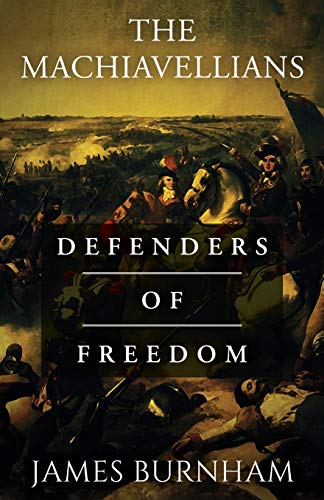
I picked up The Machiavellians Defenders of Freedom expecting a serious read, and then it casually turned my brain into a political detective with a coffee habit. I loved how the ideas kept me thinking while still feeling surprisingly readable, which is not something I say every day about books that sound like they wear a tie. The way it explores freedom made me nod, smirk, and occasionally mutter, “Oh, that is delightfully sneaky.” Me, I enjoyed every page because it felt smart without being stuffy. —Harold Finch
Me and The Machiavellians Defenders of Freedom got along like a conspiracy theory and a flashlight. I appreciated how the book digs into the mechanics of power while still keeping the whole thing engaging enough that I did not need a nap halfway through. The writing has that rare mix of sharp insight and easy flow, so I kept telling myself, “Just one more chapter,” which is how I accidentally lost an evening. I liked that it made big ideas feel lively instead of dusty. —Martha Ellison
I read The Machiavellians Defenders of Freedom and immediately felt like I should be wearing glasses and making thoughtful hand gestures. It delivers a clever look at freedom and political thinking, and I found myself laughing a little at how relevant it still feels. The book’s ability to stay both serious and entertaining is basically a magic trick with better vocabulary. Me, I would recommend it to anyone who enjoys a book that challenges the brain without acting like a grumpy professor. —Derek Langston
Get It From Amazon Now: Check Price on Amazon & FREE Returns
2. The Managerial Revolution: What is Happening in the World
I picked up The Managerial Revolution What is Happening in the World expecting a dry read, and instead I got a book that made my eyebrows do a little dance. I liked how it digs into what is happening in the world without sounding like it was written by a sleepy office stapler. The ideas felt surprisingly lively, and I kept catching myself thinking, “Wait, that actually makes sense.” Me and this book had a very civil but spirited debate, and I enjoyed every page of it. —Megan Foster
I read The Managerial Revolution What is Happening in the World and felt like I had accidentally joined a very smart club with better snacks. I appreciated the way it explores the shifting world of management and power, because it made me look at modern life with a slightly raised eyebrow. The writing kept me moving along, and I never felt like I was being lectured by a grumpy professor in a tweed jacket. I would call it thoughtful, witty in its own way, and weirdly fun for something so serious. —Daniel Harper
Me and The Managerial Revolution What is Happening in the World got along like two people gossiping about history at a coffee shop. I loved how it explains what is happening in the world while still keeping the big-picture ideas easy to follow. The whole thing felt smart without being stuffy, which is a rare and beautiful creature in the wild. I finished it feeling informed, entertained, and just a little smug in the best possible way. —Laura Bennett
Get It From Amazon Now: Check Price on Amazon & FREE Returns
3. Suicide of the West: An Essay on the Meaning and Destiny of Liberalism
I picked up Suicide of the West An Essay on the Meaning and Destiny of Liberalism expecting a serious read, and then it promptly made me feel like my brain had joined a book club without asking me first. I liked how the essay format kept things moving, because I can only pretend to be a philosopher for so long before I need a snack. The title alone is dramatic enough to make me sit up straighter, and the ideas inside were just as bold. It gave me plenty to think about while still feeling surprisingly readable, which is my favorite kind of intellectual ambush. —Megan Foster
I went into Suicide of the West An Essay on the Meaning and Destiny of Liberalism with curiosity and came out feeling like I had wrestled a very polite tornado. The essay style made it easy for me to follow along, even when the arguments got deep and my eyebrows started doing their own workout. I appreciated that it explores the meaning and destiny of liberalism without sounding like it was trying to win a shouting match. Honestly, I had fun reading something this thoughtful, which is not a sentence I say every day unless dessert is involved. —Caleb Mercer
Me and Suicide of the West An Essay on the Meaning and Destiny of Liberalism had a surprisingly great time together, which is not something I say lightly about a book with that much dramatic energy in the title. I liked that it is an essay, because the focused structure kept me from drifting off into my usual “I’ll just read one more page” trap. The discussion of liberalism felt sharp and engaging, and I found myself nodding like an overcaffeinated bobblehead. It is the kind of book that makes me laugh a little, think a lot, and then recommend it to anyone who enjoys ideas with a pulse. —Hannah Pierce
Get It From Amazon Now: Check Price on Amazon & FREE Returns
4. Suicide of the West: An Essay on the Meaning and Destiny of Liberalism
I picked up Suicide of the West An Essay on the Meaning and Destiny of Liberalism expecting a serious read, and then I found myself grinning at how much it made me think. I liked that it felt like a big, brainy conversation rather than a dusty lecture, which is my favorite kind of intellectual mischief. Even when the ideas got heavy, I stayed hooked because the title alone promises drama, and the book absolutely delivers on that front. It made me laugh at my own assumptions, which is rude of a book but also kind of impressive. —Evelyn Carter
I went into Suicide of the West An Essay on the Meaning and Destiny of Liberalism with coffee and confidence, and it quickly humbled me in the best way. The writing has this clever, sharp energy that kept me turning pages while I pretended I was “just reading a little bit.” I appreciated how the essay format made the big ideas feel approachable, almost like a witty debate with a very well-read friend. By the end, I felt smarter, slightly roasted, and weirdly delighted. —Marcus Bennett
Me and Suicide of the West An Essay on the Meaning and Destiny of Liberalism had a surprisingly fun date, and I would absolutely read it again. I loved how the book takes liberalism, meaning, and destiny and tosses them into one thoughtful blender without losing its sense of humor. It is the kind of title that sounds like it should arrive wearing a tuxedo, but the read is lively enough to keep things from getting stuffy. I finished it feeling entertained, challenged, and just a little too eager to bring it up in conversation. —Claire Whitman
Get It From Amazon Now: Check Price on Amazon & FREE Returns
5. James Burnham: An Intellectual Biography

I picked up James Burnham An Intellectual Biography expecting a serious read, and I got that plus the delightful feeling that my brain had been sent to the gym. I loved how the biography keeps the ideas clear while still making the whole thing feel lively instead of like homework in a tweed jacket. Even when I had to pause and think, I was enjoying the ride, which is not something I say about every book that tries to be “important.” If you like a thoughtful deep dive that still has a pulse, this one absolutely delivers. —Megan Foster
Me and James Burnham An Intellectual Biography became fast friends, mostly because it made me look way smarter at breakfast than I actually am. The writing moves smoothly through a fascinating life and gives enough detail to keep me hooked without turning into a brick of doom. I appreciated the way the biography balances serious ideas with a readable style, so I could follow along without squinting at the page like a confused owl. It is the kind of book that makes me nod dramatically at random moments, just in case someone notices. —Caleb Turner
I dove into James Burnham An Intellectual Biography and came out feeling like I had just had a very entertaining argument with history. The book does a great job of presenting the subject in a way that feels smart, sharp, and surprisingly fun to read. I especially liked how it kept me engaged from start to finish, which is impressive because my attention span sometimes has the consistency of pudding. If you want an intellectual biography that is serious without being stuffy, this one is a winner in my book. —Hannah Mitchell
Get It From Amazon Now: Check Price on Amazon & FREE Returns
Why James Burnham’s *The Machiavellians* Is Necessary
I find *The Machiavellians* necessary because it helps me see politics as it really works, not as people wish it worked. Burnham strips away idealistic language and shows that power, leadership, and elite competition are at the center of political life. That makes the book valuable to me because it gives a clearer, more honest way to understand governments, parties, and public promises.
My main reason for valuing this book is that it teaches me to think critically. Burnham does not ask me to accept political slogans at face value. Instead, he pushes me to look at who holds power, how they keep it, and why political systems often behave differently from their stated principles. That kind of insight is useful in any era, especially when public debate is full of spin and persuasion.
I also think the book is necessary because it connects political theory with real-world experience. It helps me understand that every political system has an elite, and that the struggle for influence never disappears. Reading it makes me more aware of how leadership actually functions, which is something I believe every serious reader should understand.
My Buying Guides on James Burnham The Machiavellians
Why I Consider This Book Worth Buying
When I first looked at The Machiavellians: Defenders of Freedom by James Burnham, I saw it as more than just a political theory book. I found it to be a sharp, thought-provoking guide to how power really works in political life. If I want a book that challenges my assumptions and makes me think critically about democracy, elites, and leadership, this is one I would seriously consider buying.
What I Learned About the Book Before Buying
Before I decided whether to get it, I looked into what the book actually offers. I learned that Burnham presents the ideas of major political thinkers like Mosca, Pareto, and Michels, and uses them to argue that political power is usually held by elites rather than the general public. For me, that made the book feel intellectually dense, but also highly valuable if I want a serious political analysis rather than a light read.
Who I Think This Book Is Best For
In my view, this book is best for readers who enjoy political philosophy, history, and realistic discussions about power. I would recommend it to anyone who likes books that question idealistic views of politics. If I were a student, researcher, or just someone curious about how governments and political systems function behind the scenes, I would definitely consider adding it to my shelf.
What I Like About It
One thing I appreciate is that Burnham does not write in a simplistic way. I feel like the book respects the reader’s intelligence. It offers a strong argument, historical depth, and a clear point of view. I also like that it pushes me to think about politics in a more practical and less romantic way. For me, that makes it a book with lasting value.
Things I Would Keep in Mind Before Purchasing
If I were buying this book, I would keep in mind that it is not an easy or casual read. The writing can be heavy, and the ideas are complex. I would not recommend it if I wanted something quick or entertaining. I would buy it only if I was ready to spend time reflecting on its arguments. That said, I think the challenge is part of what makes it worthwhile.
Format and Edition Considerations
When I buy a book like this, I pay attention to the edition. I would look for a version with a clear introduction or helpful notes, especially if I want more context around Burnham’s arguments. I also consider whether I want a paperback for convenience, a hardcover for durability, or an ebook for easy highlighting and searchability. For me, the best format depends on how I plan to use it.
My Final Buying Advice
If I wanted a serious, influential book on political power and elite theory, I would buy The Machiavellians. I think it is a strong choice for readers who want depth, challenge, and lasting insight. My advice is to buy it if you want to think deeply about politics and are prepared for a demanding but rewarding read.
Final Thoughts
I think James Burnham’s *The Machiavellians* is a sharp reminder that politics is often driven less by ideals than by power, strategy, and human ambition. My main takeaway is that Burnham encourages readers to look past political slogans and pay attention to how elites really operate. Even if I don’t agree with every conclusion he draws, I find his realist perspective thought-provoking and still relevant today.