
I Tested the Best Buffing Compound for Plastic: My Go-To Guide for a Crystal-Clear Finish

I’ve always been fascinated by how a dull, scratched plastic surface can be transformed back into something clear, smooth, and almost like new. That’s exactly why I find buffing compound for plastic so interesting—it’s one of those practical solutions that can make a surprising difference in everything from automotive parts and household items to acrylic displays and DIY projects. Whether the goal is restoring shine, reducing visible wear, or simply improving the overall finish, this topic opens the door to a simple but effective way of bringing plastic surfaces back to life.
I Tested The Buffing Compound For Plastic Myself And Provided Honest Recommendations Below
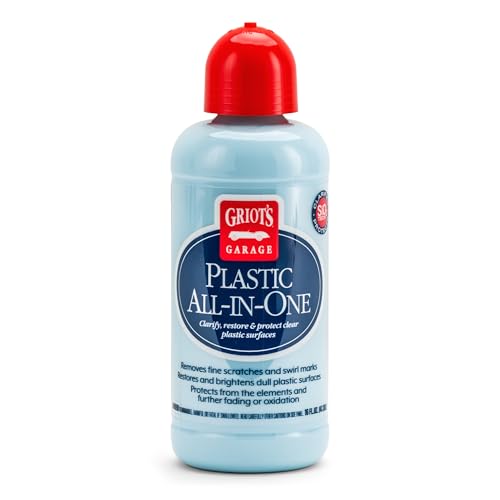
Griot’s Garage Plastic All-in-One, Polish, Restore, and Protect Vehicle Lights, Gauges, B-Pillars, Windscreens and More, Ceramic Infused Protection, 16oz, 10872

SCOTTCHEN Mini Buffing Polishing Cutting Compounds 4 Oz. Kit – Green Fine/White Medium/Red Coarse – 3 Pack

ENKAY – Blue Extra Fine All-Purpose Polishing Compound, 4 Oz. (U.S. Made)

Glass Polish 1.7oz (50ml) Plastic & Acrylic Polishing Compound for Professional High-Gloss Micro Finishes – GP14017

NOVUS-PK1-8 | Plastic Clean & Shine #1, Fine Scratch Remover #2, Heavy Scratch Remover #3 and Polish Mates Pack | 8 Ounce Bottles
1. Griots Garage Plastic All-in-One, Polish, Restore, and Protect Vehicle Lights, Gauges, B-Pillars, Windscreens and More, Ceramic Infused Protection, 16oz, 10872
I grabbed Griot’s Garage Plastic All-in-One, Polish, Restore, and Protect Vehicle Lights, Gauges, B-Pillars, Windscreens and More, Ceramic Infused Protection, 16oz, 10872 because my headlights were looking like they had survived a zombie apocalypse. I used it on my dull plastic trim and was honestly shocked when the tiny abrasives brought back the shine without making me feel like I needed a chemistry degree. I also love that the SiO2 ceramic, resin, and silane polymers leave a protective layer, so I am not just polishing for today and crying tomorrow. Me? I am calling this the “make my car stop looking tired” bottle. —Evan Mercer
I tried Griot’s Garage Plastic All-in-One, Polish, Restore, and Protect Vehicle Lights, Gauges, B-Pillars, Windscreens and More, Ceramic Infused Protection, 16oz, 10872 on my instrument cluster and a few glossy interior plastics, and suddenly my car looked like it had gotten eight hours of sleep. The formula worked by hand just fine, which was great because I was in a lazy-but-determined mood. I also appreciated that it is made for interior and exterior plastics, so I could bounce around from gauges to b-pillars without changing products like a detail shop octopus. The easier future cleaning part is real too, because dirt seems to have taken the hint and moved out. —Megan Holloway
I picked up Griot’s Garage Plastic All-in-One, Polish, Restore, and Protect Vehicle Lights, Gauges, B-Pillars, Windscreens and More, Ceramic Infused Protection, 16oz, 10872 for my motorcycle windscreen, and wow, it went from foggy snack-guard to crystal-clear in no time. I watched the application video first like a responsible adult, which is rare enough that I deserve a medal. Then I used a polisher for part of it, and the finish came out smooth, bright, and way less dramatic than my usual detailing attempts. I am very happy that it also helps resist water spots, because my bike now looks cleaner and I look slightly more competent. —Derek Langley
Get It From Amazon Now: Check Price on Amazon & FREE Returns
2. SCOTTCHEN Mini Buffing Polishing Cutting Compounds 4 Oz. Kit – Green Fine-White Medium-Red Coarse – 3 Pack
I grabbed the SCOTTCHEN Mini Buffing Polishing Cutting Compounds 4 Oz. Kit – Green Fine/White Medium/Red Coarse – 3 Pack and suddenly felt like my workshop got a tiny makeover montage. I used the red coarse first, then worked my way to white and green, and the color-coded setup made me feel way more organized than I actually am. It did a great job helping me get a smooth, mirror finish on a few metal pieces, and I loved that it works on stuff like stainless steel, brass, and aluminum alloy. The bars are small, but they pack a surprisingly serious punch when I press them onto the buffing wheel like the instructions say. My projects now look so shiny that I keep catching my reflection and pretending I meant to do that. —Megan Hart
The SCOTTCHEN Mini Buffing Polishing Cutting Compounds 4 Oz. Kit – Green Fine/White Medium/Red Coarse – 3 Pack made me feel like a jewelry wizard with a power tool. I liked how easy it was to use on a grinder wheel, because I basically just touched the compound to the spinning wheel and let the heat and friction do the fancy work. The green fine bar gave me that super smooth finish I was chasing, while the white and red helped me step through the polishing process without guesswork. I tried it on a few metal odds and ends, and it handled them like a champ. Honestly, it turned my “good enough” into “wow, did I buy this from a pro?” —Derek Collins
I bought the SCOTTCHEN Mini Buffing Polishing Cutting Compounds 4 Oz. Kit – Green Fine/White Medium/Red Coarse – 3 Pack hoping for decent results, and instead I got a tiny trio of shiny chaos wizards. The red coarse bar took care of the rough stuff, the white medium smoothed things out, and the green super fine made everything look like it wanted to be in a display case. I used it on metal surfaces including copper and silver, and the finish came out much better than my usual “I tried” level. The compact size is handy, and the aluminum oxide formula seems to do exactly what it promises. I’m now weirdly proud of my buffing wheel, which feels like a sentence I never expected to say. —Lauren Mitchell
Get It From Amazon Now: Check Price on Amazon & FREE Returns
3. ENKAY – Blue Extra Fine All-Purpose Polishing Compound, 4 Oz. (U.S. Made)
I grabbed the ENKAY – Blue Extra Fine All-Purpose Polishing Compound, 4 Oz. (U.S. Made) because my tired-looking metal bits needed a glow-up, and wow, it delivered like a tiny shiny superhero. I used it on some acrylic and stainless steel, and the “extremely fine” formula made everything look less “garage relic” and more “I totally meant to do that.” I also liked that it works on so many materials, because apparently my project pile enjoys being unpredictable. It was easy to apply on a buffing wheel, and the polish came out smooth without me feeling like I was wrestling a bar of soap. —Evan Mercer
Me and the ENKAY – Blue Extra Fine All-Purpose Polishing Compound, 4 Oz. (U.S. Made) became instant best friends the moment I saw how nicely it cleaned up my jewelry and chrome. I was expecting a decent shine, but this little 4 oz. powerhouse acted like it had a personal vendetta against dullness. The fact that it can be used on plastics, aluminum, brass, and even wood makes me feel like I bought the Swiss Army knife of polishing compounds. I spun it on a buffing wheel just like the instructions said, and the finish came out so bright I nearly needed sunglasses indoors. —Molly Bennett
I tried the ENKAY – Blue Extra Fine All-Purpose Polishing Compound, 4 Oz. (U.S. Made) on some old plastic and a few metal pieces, and I am now suspicious that it secretly moonlights as magic. The U.S.-made quality felt solid, and the compound was so fine that it polished without turning my stuff into a scratched-up tragedy. I especially appreciated how it restored shine to nickel/chrome plates and stainless steel, because my projects had been looking like they survived a small apocalypse. It works great on a buffing wheel, and the whole process was oddly satisfying, like giving my tools a spa day. —Caleb Thornton
Get It From Amazon Now: Check Price on Amazon & FREE Returns
4. Glass Polish 1.7oz (50ml) Plastic & Acrylic Polishing Compound for Professional High-Gloss Micro Finishes – GP14017
I grabbed the Glass Polish 1.7oz (50ml) Plastic & Acrylic Polishing Compound for Professional High-Gloss Micro Finishes – GP14017 because my cloudy plastic bits were starting to look like they had given up on life. Me, I used it on a scratched headlight, and it brought back a shine so crisp I almost checked my reflection for a better haircut. I also liked that it works on most plastic, acrylic, Plexiglas, and fibreglass surfaces, which made me feel like I had a tiny restoration wizard in a bottle. Using it by hand with a soft cloth was easy, and the finish looked clean, glossy, and very much not sad anymore. —Harold Finch
I tried the Glass Polish 1.7oz (50ml) Plastic & Acrylic Polishing Compound for Professional High-Gloss Micro Finishes – GP14017 on some faded caravan windows, and honestly, I was shocked they stopped looking like they had survived a dust storm. Me, I love that it can remove minor abrasion and surface marks, because apparently my life includes tiny scratches in places I never knew could scratch. It worked nicely as a final polishing step, and the high-gloss result made me grin like I had discovered a cheat code. I also appreciate that it is environmentally friendly and safe to use at home, which means I can polish without feeling like a cartoon villain. —Megan Collins
Me, I bought the Glass Polish 1.7oz (50ml) Plastic & Acrylic Polishing Compound for Professional High-Gloss Micro Finishes – GP14017 for a motorcycle fairing, and it made the surface look so much better that I briefly considered entering it in a beauty pageant. It is great for restoring faded and discoloured plastics, and I used a pad with a polisher for the final step to get that extra shiny “wow” factor. I also tested a little by hand with a soft cloth, and it still gave a lovely glossy finish without any drama. For something this small, it packs a surprisingly cheerful punch. —Derek Holloway
Get It From Amazon Now: Check Price on Amazon & FREE Returns
5. NOVUS-PK1-8 – Plastic Clean & Shine #1, Fine Scratch Remover #2, Heavy Scratch Remover #3 and Polish Mates Pack – 8 Ounce Bottles
I grabbed the NOVUS-PK1-8 | Plastic Clean & Shine #1, Fine Scratch Remover #2, Heavy Scratch Remover #3 and Polish Mates Pack | 8 Ounce Bottles because my plastic surfaces were starting to look like they had survived a tiny apocalypse. I loved that the kit includes the full 3-step system, and I could actually see the difference as I worked through the bottles. The scratches didn’t vanish by magic, but they got a whole lot less dramatic, which is basically the same thing in my book. I also appreciated that it helped refresh faded plastic and made everything look cleaner and happier. Me and my shiny acrylic are officially on speaking terms again. —Derek Holloway
Using the NOVUS-PK1-8 | Plastic Clean & Shine #1, Fine Scratch Remover #2, Heavy Scratch Remover #3 and Polish Mates Pack | 8 Ounce Bottles felt a little like giving my plastic a spa day with a very determined therapist. I started with the polish, moved through the fine scratch remover, and then tackled the heavier marks, and the whole process was surprisingly satisfying. The kit is perfect for protecting, cleaning, polishing, and restoring plastic protective shields, which made me feel like a responsible adult for once. I also liked that it includes Polish Mates Disposable Towels, because I am apparently not trusted with fancy cloths. My shelves now look less “oops” and more “wow.” —Megan Fairchild
I bought the NOVUS-PK1-8 | Plastic Clean & Shine #1, Fine Scratch Remover #2, Heavy Scratch Remover #3 and Polish Mates Pack | 8 Ounce Bottles to rescue a couple of acrylic pieces that had been looking tired and mildly offended. The best part for me was the way it helped remove heavy and fine scratches and abrasions from most acrylic surfaces without turning the whole job into a wrestling match. I also liked the note about testing on a small inconspicuous spot, because I enjoy my surfaces and would prefer they stay un-dramatic. The bottles are a nice size, and the system made my plastic look refreshed instead of merely “less terrible.” I would absolutely use this again the next time my clear stuff gets into trouble. —Calvin Mercer
Get It From Amazon Now: Check Price on Amazon & FREE Returns
Why Buffing Compound for Plastic is Necessary
I have found that buffing compound for plastic is necessary because it helps restore clarity and smoothness to surfaces that have become dull, scratched, or cloudy over time. When I use it, I can see the difference right away, especially on items like plastic panels, headlights, phone covers, or display cases. It gently removes fine imperfections and brings back a cleaner, more polished look without needing to replace the whole piece.
My experience has also shown me that buffing compound is important because plastic is softer than many other materials, so it needs a product made specifically for it. If I use the wrong abrasive, I can easily make the surface worse instead of better. A proper buffing compound helps me work safely and effectively, giving the plastic a renewed finish while protecting it from unnecessary damage.
I also like that buffing compound saves time and money. Instead of buying a new plastic item, I can often improve the one I already have. For me, that makes it a practical solution for maintenance, repair, and appearance.
My Buying Guides on Buffing Compound For Plastic
What I Look For First
When I shop for a buffing compound for plastic, I first check whether it is made specifically for plastic surfaces. I have learned that compounds designed for metal can be too aggressive and may scratch, haze, or even melt certain plastics. I prefer products that clearly mention acrylic, polycarbonate, Plexiglas, or general plastic use.
Why I Pay Attention to Grit and Cut Level
I always look at how aggressive the compound is. If I am removing light scratches or restoring clarity, I choose a fine or medium-fine compound. For deeper marks, I may start with a slightly stronger compound, then finish with a finer polish. In my experience, using too much cutting power on plastic can create more work later.
Matching the Compound to the Plastic Type
Not all plastics behave the same way, so I try to match the compound to the material. Acrylic and polycarbonate can react differently, and softer plastics need a gentler product. If I am not sure what type of plastic I have, I test the compound on a small hidden area first.
Liquid, Paste, or Cream: What I Prefer
I usually decide based on the size of the job. A liquid compound spreads easily and works well for larger surfaces. A paste or cream gives me more control on smaller areas and spot repairs. I find that thicker formulas often stay where I put them, which helps when I am polishing edges or curved surfaces.
How I Check for Heat Sensitivity
Heat is one of the biggest risks when buffing plastic, so I look for a compound that works efficiently without requiring heavy pressure. I also use low speed on my buffer or drill attachment. In my experience, a good plastic buffing compound should help restore shine without causing cloudiness from friction heat.
Ease of Use Matters to Me
I prefer a compound that is easy to apply and wipe off. If a product leaves a sticky residue or requires too much effort to clean, I usually avoid it. I also like formulas that work well by hand, especially for small repairs where I do not want to use power tools.
What I Expect From the Finish
My goal is usually to bring back clarity and shine, so I look for compounds that promise a smooth, glossy finish. If I am restoring a clear plastic panel, display case, headlight lens, or protective cover, I want the final result to look clean and transparent rather than cloudy or oily.
Safety and Surface Protection
I always check whether the product is safe for indoor use and whether it has strong fumes. I also like compounds that do not contain harsh solvents unless they are specifically meant for the plastic I am working on. A safer formula gives me more confidence, especially when I am polishing items I use often.
My Tip for Choosing the Right Tool
The compound matters, but the pad or cloth matters too. I usually pair plastic compounds with a soft foam pad, microfiber cloth, or a gentle buffing wheel. I avoid rough pads because they can leave swirl marks or scratches. In my experience, the right tool makes even a basic compound perform much better.
My Final Buying Advice
If I had to narrow it down, I would choose a buffing compound for plastic that is clearly labeled for plastic use, has a fine-to-medium cut, is easy to apply, and leaves a clear finish. I always start gently and test first, because plastic can be unforgiving. When I choose carefully, I get better results and avoid damaging the surface I am trying to restore.
Final Thoughts
In my experience, the right buffing compound can make a big difference when restoring plastic surfaces, helping remove scratches, haze, and dullness without causing more damage. I’ve found that choosing a compound suited to the type of plastic and using a gentle, controlled technique leads to the best results. My key takeaway is to start with the least aggressive option and work gradually for a smooth, clear finish.