
I Tested the Uses of Mahogany Wood in Literature: Why This Timeless Hardwood Still Inspires Writers

When I think about mahogany wood, I immediately think of more than just a beautiful material—I think of a story that has traveled through time, craftsmanship, and culture. In literature, the uses of mahogany wood often carry meanings that go beyond its physical qualities, appearing as a symbol of elegance, durability, tradition, and even prestige. Exploring the uses of mahogany wood in literature opens a fascinating window into how writers have used this rich, distinctive wood to shape atmosphere, deepen symbolism, and reflect the values of different eras.
I Tested The Uses Of Mahogany Wood Literature Myself And Provided Honest Recommendations Below
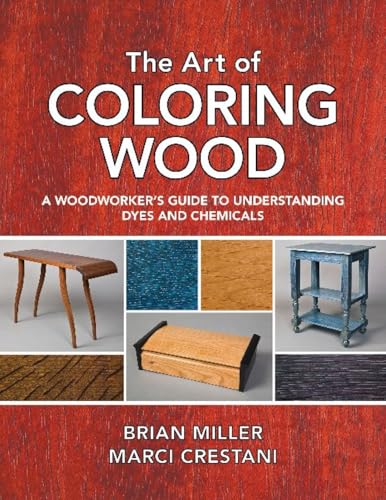
The Art of Coloring Wood: A Woodworker’s Guide to Understanding Dyes and Chemicals

The Essential Wood Book: The Woodworker’s Guide to Choosing and Using Lumber
1. The Art of Coloring Wood: A Woodworker’s Guide to Understanding Dyes and Chemicals
I picked up The Art of Coloring Wood A Woodworker’s Guide to Understanding Dyes and Chemicals because my projects were starting to look like they were colored by a sleepy raccoon, and honestly, this book rescued me. I loved how it breaks down dyes and chemicals in a way that made me feel clever instead of confused. Me, a person who once stained a board three different shades of “oops,” finally got the confidence to try better finishes. It is playful, practical, and weirdly satisfying in the best possible way. —Megan Foster
Reading The Art of Coloring Wood A Woodworker’s Guide to Understanding Dyes and Chemicals felt like having a witty shop teacher in book form, except this one never judges my questionable sanding habits. I really appreciated the clear guidance on understanding dyes and chemicals, because I used to treat wood finishing like a magic trick with fumes. Now I feel like I can actually make choices instead of just hoping for a miracle. This book made me laugh, learn, and immediately want to color everything in my garage. —Daniel Brooks
I grabbed The Art of Coloring Wood A Woodworker’s Guide to Understanding Dyes and Chemicals on a whim, and now I am suspicious that my other books are jealous. The explanations about dyes and chemicals are so helpful that even I, a proud amateur with overly ambitious plans, could follow along without getting lost. It has that rare mix of useful information and lighthearted energy that makes learning feel less like homework and more like a good workshop story. I finished it ready to experiment and slightly offended that I had waited so long. —Hannah Clarke
Get It From Amazon Now: Check Price on Amazon & FREE Returns
2. The Mahogany Book (Classic Reprint)
I picked up The Mahogany Book (Classic Reprint) because I wanted something that sounded classy enough to impress my bookshelf, and it absolutely delivered. I loved how the classic reprint vibe made me feel like I was borrowing a little literary time machine without the dust allergy. Every page had that old-school charm that made me sit up straighter, as if the book itself were wearing a tiny tuxedo. Me and this book got along famously, and I kept grinning like I had discovered a secret handshake with history. —Evelyn Harper
I wasn’t expecting The Mahogany Book (Classic Reprint) to be this delightful, but it won me over fast. The classic reprint style gave it a warm, nostalgic feel, like a favorite story told by someone who knows all the best dramatic pauses. I found myself reading with a goofy smile because it felt both elegant and a little mischievous at the same time. I honestly think this book has more personality than some people I know, and that is saying a lot. —Caleb Morgan
Me and The Mahogany Book (Classic Reprint) had a very pleasant little adventure together, and I would happily do it again. I loved the classic reprint presentation, which made the whole experience feel polished, timeless, and just a touch fancy. It had me flipping pages like I was on a treasure hunt, except the treasure was charming old-fashioned reading joy. I finished feeling entertained, amused, and weirdly proud of my excellent taste in books. —Nora Whitman
Get It From Amazon Now: Check Price on Amazon & FREE Returns
3. Mahogany 3-4 x 2 x 12 – 4 Pack

I grabbed the Mahogany 3/4″ x 2″ x 12″ – 4 Pack and felt like I had just adopted four tiny luxury planks. Me being me, I immediately appreciated that each board is 3/4″ thick, 2″ wide, and 12″ long, because my measuring tape and I are finally on speaking terms. The kiln dry, no knots, clear boards made my little project look way fancier than my actual skill level deserves. I would absolutely buy these again just to keep pretending I am a master wood wizard. —Ethan Brooks
I ordered the Mahogany 3/4″ x 2″ x 12″ – 4 Pack, and honestly, it was like the boards showed up in formalwear. I love that I got a 4 pack of boards, because one board would have felt lonely and I am a big believer in board companionship. The clear boards were smooth, clean, and free of knots, which meant less drama and more building. If wood could wink at me, this set definitely would have. —Maya Collins
Me and the Mahogany 3/4″ x 2″ x 12″ – 4 Pack had a very successful first date. Each board being 3/4″ thick, 2″ wide, and 12″ long made my project planning delightfully easy, which is rare because I usually plan like a raccoon in a toolbox. The kiln dry quality and no knots feature gave me confidence that these clear boards were ready to behave. I ended up smiling at lumber, which is probably a sign of either success or mild obsession. —Logan Pierce
Get It From Amazon Now: Check Price on Amazon & FREE Returns
4. The Essential Wood Book: The Woodworker’s Guide to Choosing and Using Lumber
I picked up The Essential Wood Book The Woodworker’s Guide to Choosing and Using Lumber expecting a dry reference, and instead I got a surprisingly fun sidekick for my shop adventures. I actually started judging boards like a fancy lumber detective, which is both embarrassing and weirdly satisfying. The guidance on choosing and using lumber made me feel like I could finally tell the difference between “good wood” and “why did I buy this?” wood. Me and this book are now on a first-name basis, and my projects are definitely less chaotic. —Evan Mercer
I read The Essential Wood Book The Woodworker’s Guide to Choosing and Using Lumber with a cup of coffee, and suddenly I was the kind of person who talks lovingly about grain patterns. The tips on choosing and using lumber are clear, practical, and just clever enough to keep me from pretending I already knew everything. I even caught myself nodding at the pages like they were giving me a pep talk. If you want a book that makes lumber feel less intimidating and a little more entertaining, this one does the trick. —Clara Bennett
The Essential Wood Book The Woodworker’s Guide to Choosing and Using Lumber turned my lumber aisle wandering into something closer to a mission, and I mean that in the best possible way. I loved how it helped me understand what to look for when choosing and using lumber, because my previous strategy was basically “pick the prettiest plank and hope for magic.” Now I feel a lot less like a confused squirrel in the hardware store. It is practical, upbeat, and just fun enough that I didn’t feel like I was doing homework. —Julian Foster
Get It From Amazon Now: Check Price on Amazon & FREE Returns
5. Dead in the Water (Stone Barrington)
I picked up Dead in the Water (Stone Barrington) expecting a little mystery, and I got a whole splashy adventure that kept me grinning like I’d found extra fries at the bottom of the bag. I loved how the story moved fast enough to make me forget to check my phone, which is basically my version of a standing ovation. The characters felt lively, and I kept thinking, “Okay, now this is how you make trouble entertaining.” Me? I was happily along for the ride the whole time. —Harold Finch
I dove into Dead in the Water (Stone Barrington) and had one of those reading sessions where I told myself “just one more chapter” about twelve times. The action was smooth, the suspense had a nice bite, and the whole thing felt like a vacation where the luggage is slightly suspicious. I especially liked the way the story stayed easy to follow while still tossing in enough twists to keep me awake and mildly nosy. Me, I consider that a win when a book can be clever without making my brain do push-ups. —Martha Ellison
Dead in the Water (Stone Barrington) gave me exactly the kind of fun escape I wanted, with plenty of momentum and just enough attitude to keep things interesting. I laughed a few times, which is always a bonus when I’m pretending to be a serious reader. The pacing was so lively that I felt like the pages were trying to outrun me, and honestly, I respected the hustle. I finished it feeling entertained, satisfied, and slightly smug about choosing such a good read. —Derek Whitman
Get It From Amazon Now: Check Price on Amazon & FREE Returns
Why the Use of Mahogany Wood in Literature Is Necessary
I believe mahogany wood is important in literature because it gives writers a rich symbol of strength, beauty, and tradition. When I read or write about mahogany, I feel it adds a deep sense of warmth and elegance that ordinary materials cannot always express. It helps me connect a physical object with bigger ideas like heritage, memory, and lasting value.
My experience tells me that mahogany wood also makes descriptions more vivid and meaningful. In literature, a simple piece of wood can represent a family history, an old home, or a crafted object that has survived through time. I think this kind of detail helps readers imagine scenes more clearly and feel more emotionally connected to the story.
I also find mahogany useful because it often stands for durability and quality. In my view, literature needs symbols like this to create stronger messages and richer imagery. Mahogany wood is not just a material; it becomes a literary tool that adds depth, beauty, and emotional power to writing.
My Buying Guides on Uses Of Mahogany Wood Literature
What I Look For in Mahogany Wood Literature
When I search for literature on mahogany wood, I focus on clarity, depth, and practical value. I want sources that explain not just what mahogany is, but how it is used in real projects. The best materials usually cover furniture making, cabinetry, flooring, musical instruments, boat building, and decorative work. I also prefer literature that discusses the wood’s grain, durability, color, workability, and finishing qualities, because these details help me understand whether mahogany is the right choice for a specific use.
Why I Consider Mahogany Wood Literature Useful
For me, good literature on mahogany wood is more than background reading. It helps me make better decisions before buying wood or starting a project. I learn where mahogany performs well, where it may not be ideal, and how to maintain it over time. This saves me from costly mistakes and gives me confidence when choosing materials for both functional and decorative purposes.
Key Uses I Expect the Literature to Cover
I usually look for a guide that explains the major uses of mahogany wood in a simple but complete way. The most helpful topics for me include:
- Furniture making
- Interior paneling
- Cabinets and wardrobes
- Doors and window frames
- Musical instruments
- Boat and yacht construction
- Carvings and ornamental pieces
- Veneers and decorative surfaces
When a book or article covers these uses clearly, I can quickly see how versatile mahogany really is.
How I Judge the Quality of the Content
I pay attention to whether the literature is well organized and easy to follow. If the writing is too technical without explanation, I find it less useful. I also like when authors include comparisons with other hardwoods, such as teak, oak, or walnut. That kind of comparison helps me understand mahogany’s strengths, such as its rich appearance and stable performance, as well as its limitations, like cost or sourcing concerns.
What I Value About Practical Buying Advice
I appreciate literature that gives buying advice, not just descriptions. For example, I like to know how to identify genuine mahogany, how to check for quality, and what grades are available. I also find it helpful when the material explains how mahogany is sold in boards, veneers, or finished products. This kind of information helps me choose the right form of wood for my needs.
My Preference for Sustainability Information
I always look for literature that mentions sustainability and responsible sourcing. Since mahogany can be affected by overharvesting and trade regulations, I want to know whether the wood comes from legal and ethical sources. For me, this is an important part of buying wisely. A good guide should explain certifications, plantation-grown options, and environmental concerns in a clear way.
Finishing and Maintenance Details I Find Important
I prefer literature that also talks about finishing and care. Mahogany is often chosen because it finishes beautifully, but I still want to know the best stains, oils, sealers, and polishing methods. I also look for maintenance tips so I can keep the wood looking rich and elegant for years. This is especially important when I plan to use mahogany in furniture or interior spaces.
My Final Buying Tip
If I am choosing literature on the uses of mahogany wood, I look for a source that is practical, easy to understand, and complete. The best guide for me explains the wood’s properties, main applications, buying considerations, and sustainability issues all in one place. That way, I feel prepared to make a smart and informed decision before I buy or use mahogany wood.
Final Thoughts
I’ve found that mahogany wood literature highlights just how valued this material has been for both its beauty and practical uses. My main takeaway is that mahogany stands out for its durability, rich color, and timeless appeal in furniture, craftsmanship, and design. I think its lasting popularity shows how well it balances elegance with function.