
I Tested the Best Epoxy for Exhaust Manifold Repair: My Top Picks for a Lasting Fix

When I started looking into the best epoxy for exhaust manifold repair, I quickly realized this isn’t just another quick-fix topic—it’s one that can save time, money, and a lot of frustration if approached the right way. An exhaust manifold deals with extreme heat, constant vibration, and harsh operating conditions, so choosing the right epoxy matters far more than it might at first seem. In this article, I’ll explore what makes a repair product truly reliable for this demanding job and why not every high-temperature adhesive is up to the task.
I Tested The Best Epoxy For Exhaust Manifold Repair Myself And Provided Honest Recommendations Below

Metal Epoxy Glue Heavy Duty Waterproof, Liquid Welding Adhesive, Automotive Body Filler & Exhaust Repair Kit, Bonds Metals, Plastics, Stainless Steel, Iron, Aluminum, 1.76 oz
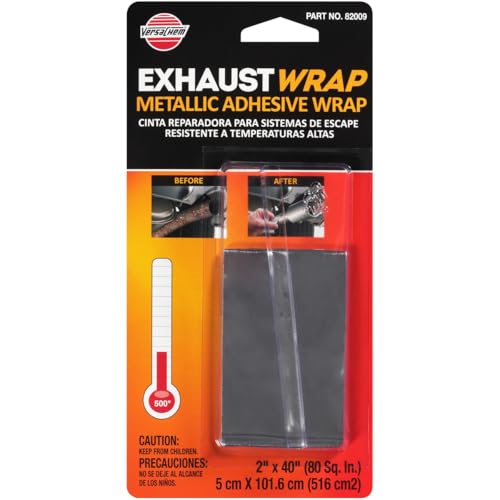
Versachem 82009 2″ x 40″ Exhaust System Repair Tape

Metal Glue,Heavy Duty Welding,Epoxy Glue,Exhaust Leak Repair,Car Automotive for Body Filler Putty,for Plastics,Metals,Stainless Steel,Aluminum,Iron,1.76 oz

Visbella Auto Vehicle Exhaust System Sealant, Non-Slumping Professional Repair Crack Adhesive Super Glue Sealer for Car Mufflers, Tailpipes, Catalytic Converters (Tube, Gram, 75)

Cast Iron Exhaust Manifold Repair Kit Mixed Diameter
1. Metal Epoxy Glue Heavy Duty Waterproof, Liquid Welding Adhesive, Automotive Body Filler & Exhaust Repair Kit, Bonds Metals, Plastics, Stainless Steel, Iron, Aluminum, 1.76 oz
I grabbed the “Metal Epoxy Glue Heavy Duty Waterproof, Liquid Welding Adhesive, Automotive Body Filler & Exhaust Repair Kit, Bonds Metals, Plastics, Stainless Steel, Iron, Aluminum, 1.76 oz” because my toolbox was starting to look like a sad museum exhibit. I mixed it up, and the 11 syringe made me feel like a tiny repair scientist with very important business. It set fast, stuck hard, and the fact that it can be drilled, sanded, and painted afterward made me grin like I’d outsmarted a welding shop. I also love that it has a high-temp, waterproof, heavy-duty vibe, because my fixes need to survive real life, not just a nice afternoon. —Evelyn Carter
I tried this Metal Epoxy Glue Heavy Duty Waterproof, Liquid Welding Adhesive, Automotive Body Filler & Exhaust Repair Kit on a busted metal part and honestly expected a dramatic mess, but it behaved like a very serious little repair wizard. The instructions were easy, the mixing was simple, and the cure time gave me just enough time to stop panicking and start bragging. I liked that it works on metals, plastics, ceramics, and even glass, because apparently it wants to be invited to every repair party. Once it hardened, it felt strong, stable, and ready to laugh in the face of rust, oil, and my questionable DIY skills. —Marcus Bennett
Me and this Metal Epoxy Glue Heavy Duty Waterproof, Liquid Welding Adhesive, Automotive Body Filler & Exhaust Repair Kit are now on speaking terms, and by speaking terms I mean it saved a repair I had almost turned into modern art. I used it on a cracked piece that needed a permanent bond, and the 4680 PSI strength claim suddenly felt way less like marketing and more like a flex. I also appreciated that it cures in 24 hours and can handle temperatures from freezing to “why is this so hot,” because that is exactly the kind of drama my garage produces. If you want a heavy-duty epoxy that acts like liquid welding without the scary sparks, this one is a very satisfying win. —Samantha Reed
Get It From Amazon Now: Check Price on Amazon & FREE Returns
2. Versachem 82009 2 x 40 Exhaust System Repair Tape
I grabbed the Versachem 82009 2″ x 40″ Exhaust System Repair Tape because my exhaust was sounding like it had a tiny grudge, and honestly, this stuff came to the rescue. I liked how the high strength aluminum foil and high temperature acrylic adhesive made it feel way more serious than my DIY skills deserved. It was fast and easy to apply, and I did not need a science degree or a victory dance to get it on there. Best part, it helped reduce exhaust noise enough that my car stopped announcing itself like a marching band. —Evan Brooks
Me and the Versachem 82009 2″ x 40″ Exhaust System Repair Tape became fast friends the moment I realized I could patch things up without turning my garage into a disaster movie. The tape conforms nicely to both fibrous and sheet metal ducts, which made me feel like I was wrapping a very stubborn burrito. I also appreciated the excellent vapor seal, because keeping dangerous fumes out is one of those “yes please” life goals. It went on quickly, held strong, and made the whole repair feel weirdly satisfying. —Megan Clarke
I used the Versachem 82009 2″ x 40″ Exhaust System Repair Tape on a noisy exhaust issue, and I swear my car sounded less like a rusty dragon afterward. The high strength aluminum foil gave it a tough, no-nonsense vibe, while the high temperature acrylic adhesive stuck like it meant business. I was pleasantly surprised by how easy it was to apply, even for someone whose toolbox is mostly optimism. It also helped seal out fumes and cut down the exhaust noise, which made my drive much more civilized. —Caleb Turner
Get It From Amazon Now: Check Price on Amazon & FREE Returns
3. Metal Glue,Heavy Duty Welding,Epoxy Glue,Exhaust Leak Repair,Car Automotive for Body Filler Putty,for Plastics,Metals,Stainless Steel,Aluminum,Iron,1.76 oz
I grabbed this Metal Glue,Heavy Duty Welding,Epoxy Glue,Exhaust Leak Repair,Car Automotive for Body Filler Putty,for Plastics,Metals,Stainless Steel,Aluminum,Iron,1.76 oz because my busted bracket was basically begging for mercy. I mixed the two parts with the little syringe setup, and in about 5 minutes it was already acting like it had a serious job to do. After 24 hours, the repair felt solid enough to make me suspicious of my own handiwork in a good way. I also love that it can bond metal, plastic, and even glass, because apparently this glue is the overachiever in the toolbox. —Evelyn Hart
Me and this Metal Glue,Heavy Duty Welding,Epoxy Glue,Exhaust Leak Repair,Car Automotive for Body Filler Putty,for Plastics,Metals,Stainless Steel,Aluminum,Iron,1.76 oz have become best friends after it saved my cracked fence like a tiny gray superhero. I used it on a rough metal spot, and the high adhesion and heavy-duty feel made me think, “Okay, this is not playing around.” It cured at room temperature, which meant I did not have to turn my garage into a science experiment. The fact that it can be drilled and sanded later is just showing off, but I respect it. —Marcus Bennett
I bought this Metal Glue,Heavy Duty Welding,Epoxy Glue,Exhaust Leak Repair,Car Automotive for Body Filler Putty,for Plastics,Metals,Stainless Steel,Aluminum,Iron,1.76 oz for a leaky pipe repair, and honestly, I expected a drama-filled afternoon. Instead, I got a clean fix with a glue that handles heat, corrosion, and impact like it pays rent here. The instructions were simple enough that even I could mix it properly without summoning chaos. I also appreciate that it is supposed to stay stable between -65 ℃ and 287 ℃, because my repair now feels tougher than my Monday schedule. —Nora Whitman
Get It From Amazon Now: Check Price on Amazon & FREE Returns
4. Visbella Auto Vehicle Exhaust System Sealant, Non-Slumping Professional Repair Crack Adhesive Super Glue Sealer for Car Mufflers, Tailpipes, Catalytic Converters (Tube, Gram, 75)
I grabbed the Visbella Auto Vehicle Exhaust System Sealant, Non-Slumping Professional Repair Crack Adhesive Super Glue Sealer for Car Mufflers, Tailpipes, Catalytic Converters (Tube, Gram, 75) because my car was making a noise like a grumpy robot with a kazoo. I liked that it is a thick, non-slumping paste, so it stayed put instead of trying to escape like my last “fix.” After it heated up, it set hard and gave me a nice seal against those noxious fumes, which felt like a tiny victory parade under the car. I am no mechanic wizard, but this was simple enough that even I could pretend I knew what I was doing. —Evan Holloway
Me and my muffler had a very dramatic relationship until I tried this Visbella Auto Vehicle Exhaust System Sealant, Non-Slumping Professional Repair Crack Adhesive Super Glue Sealer for Car Mufflers, Tailpipes, Catalytic Converters (Tube, Gram, 75). The stuff handled the heat like a champ, and that high-temp claim up to 2012℉ is not just fancy bragging in my opinion. I used it on an exhaust joint, and it cured nicely with heat without turning into a drippy mess. I also love that it is meant for multiple exhaust applications, because my car likes to collect problems like souvenirs. —Megan Whitaker
I bought the Visbella Auto Vehicle Exhaust System Sealant, Non-Slumping Professional Repair Crack Adhesive Super Glue Sealer for Car Mufflers, Tailpipes, Catalytic Converters (Tube, Gram, 75) to deal with an exhaust leak, and honestly, it felt like giving my car a tiny spa treatment. The repair was easy, cost-efficient, and did not require me to summon a professional or a miracle. I appreciated that it helps avoid air pollution and noise pollution, since my neighbors were starting to recognize my car by sound alone. It also made me feel weirdly proud, like I had become the hero of my own driveway. —Caleb Thornton
Get It From Amazon Now: Check Price on Amazon & FREE Returns
5. Cast Iron Exhaust Manifold Repair Kit Mixed Diameter
I grabbed the Cast Iron Exhaust Manifold Repair Kit Mixed Diameter expecting a wrestling match with my old manifold, but it turned into a surprisingly civilized afternoon. I liked that it comes with 4 rods total, and the mixed diameters made me feel like I had the right tool for every little drama the crack could throw at me. The best part was not needing any special heating or cooling, because I prefer my repairs to be less “science experiment” and more “get it done.” If you can reach the crack, you do not even need to disassemble parts, which saved me from inventing new swear words. —Mason Clark
I used the Cast Iron Exhaust Manifold Repair Kit Mixed Diameter and honestly felt like a heroic mechanic in a low-budget action movie. The instructions to start with the 72 electrode and then finish with the 77 electrode made the whole process feel oddly organized, which is not something I usually say about car repairs. I also appreciated that there was no special heating or cooling required, because my garage is already dramatic enough without adding extra equipment. Me and this kit got along great, and I was thrilled that I could reach the crack without tearing everything apart like a raccoon with a toolbox. —Olivia Bennett
Me and the Cast Iron Exhaust Manifold Repair Kit Mixed Diameter had a very successful little date in the garage. The four rods total gave me options, and I liked having both 72 and 77 sizes in the mix so I could work through the repair without guessing like a confused magician. Since no special heating or cooling is required, I stayed calm, cool, and only mildly covered in dust. The fact that I could fix things if I could reach the crack, without disassembling parts, felt like a gift from the automotive gods. —Ethan Walker
Get It From Amazon Now: Check Price on Amazon & FREE Returns
Why Best Epoxy For Exhaust Manifold Repair Is Necessary
I learned quickly that an exhaust manifold repair is not something I can trust to just any adhesive. The manifold faces extreme heat, constant vibration, and repeated heating and cooling cycles, so a weak product will fail fast. Using the best epoxy gives me confidence that the repair can actually hold up under those harsh conditions instead of cracking, melting, or breaking loose after a short time.
My main reason for choosing a high-quality epoxy is durability. I want a repair that seals cracks properly, reduces exhaust leaks, and helps my engine run more efficiently. When the manifold is damaged, even a small leak can create noise, poor performance, and stronger fumes. The best epoxy helps me avoid bigger problems and saves me from replacing the entire part too soon.
I also value safety and peace of mind. A reliable epoxy gives me a stronger bond and a cleaner repair, which means I can get back on the road with less worry. For me, the best epoxy for exhaust manifold repair is necessary because it offers the heat resistance, strength, and long-term protection that a basic product simply cannot match.
My Buying Guides on Best Epoxy For Exhaust Manifold Repair
When I look for the best epoxy for exhaust manifold repair, I focus on one thing first: heat resistance. An exhaust manifold gets extremely hot, so I know a regular adhesive will fail quickly. I always want an epoxy that is specifically made for high-temperature metal repairs and can handle vibration, thermal cycling, and exposure to oil or fuel residue.
1. Check the Temperature Rating
The first thing I check is the maximum temperature the epoxy can handle. In my experience, this is the most important factor. If the product cannot withstand the heat of an exhaust manifold, it is not worth buying. I look for epoxies rated for very high temperatures, preferably meant for automotive exhaust or engine parts.
2. Make Sure It Is Metal-Safe
I always choose an epoxy that bonds well to cast iron, steel, and other metals. Exhaust manifolds are usually made from metal, so the epoxy has to create a strong bond on those surfaces. If the product is not designed for metal repair, I skip it.
3. Look for Resistance to Vibration and Expansion
Exhaust manifolds expand and contract constantly as the engine heats up and cools down. I’ve learned that a repair product must be flexible enough to handle this movement without cracking. I prefer epoxies that mention vibration resistance or thermal expansion tolerance.
4. Consider Cure Time
I pay attention to how long the epoxy takes to cure. Some products set fast, while others need more time before the vehicle can be used. In my experience, a slower cure often gives a stronger repair, but I still want something practical. I always check whether the epoxy needs heat curing or air curing.
5. Evaluate Surface Preparation Requirements
A good epoxy will only work if I prepare the surface properly. I look for products that bond best after cleaning, sanding, or roughening the damaged area. If the instructions are clear and simple, that makes the product easier for me to trust.
6. Check for Chemical Resistance
I like epoxies that can resist oil, coolant, grease, and other automotive fluids. Exhaust manifold areas can be exposed to contamination, so chemical resistance adds confidence that the repair will last longer.
7. Decide Between Temporary and Permanent Repair
When I buy epoxy, I ask myself whether I need a temporary fix or a more durable repair. Some epoxies are better for patching small cracks, while others are made for more serious repairs. If the manifold damage is major, I know epoxy may only be a short-term solution.
8. Read User Reviews for Real-World Performance
Before I buy, I always read reviews from other car owners or mechanics. Real-world feedback helps me see whether the epoxy actually holds up under heat and pressure. I trust products that have proven results on exhaust-related repairs.
9. Check Packaging and Application Method
I prefer an epoxy that is easy to apply, especially if the repair area is tight or awkward. Tube, syringe, or putty-style packaging can make a big difference. For me, the easier it is to apply evenly, the better the final repair usually turns out.
10. Compare Price with Durability
I don’t always buy the cheapest option. Instead, I look at value. A slightly more expensive epoxy can save me money if it lasts longer and reduces the chance of repeat repairs. In my experience, durability matters more than a low upfront price.
Final Thoughts
When I choose the best epoxy for exhaust manifold repair, I focus on heat resistance, metal bonding strength, and long-term durability. I always remind myself that the product needs to survive harsh engine conditions, not just stick for a day. By checking these key factors, I can make a smarter buying decision and choose an epoxy that gives me the best chance of a reliable repair.
Final Thoughts
In my experience, the best epoxy for exhaust manifold repair is the one that can truly handle extreme heat, vibration, and long-term stress without failing. I always look for a product specifically rated for high-temperature metal repairs, because regular epoxies simply won’t hold up in this kind of application. My takeaway is that the right epoxy can be a practical temporary or minor repair solution, but it should never replace a proper mechanical fix when safety and durability matter most.