
I Tested the Best Toys for Teaching Kids to Read: Fun, Effective Picks That Really Work

I’ve always believed that learning to read should feel exciting, not intimidating—and that’s exactly why the right toys can make such a big difference. When I think about the best toys for teaching kids to read, I think of playful tools that spark curiosity, build confidence, and turn early literacy into something children genuinely want to explore. From recognizing letters to connecting sounds with words, these toys can help make reading feel like a natural part of play. In this article, I’ll share why these learning tools matter and how they can support a child’s reading journey in a fun, meaningful way.
I Tested The Best Toys For Teaching Kids To Read Myself And Provided Honest Recommendations Below

LITTLE BUD KIDS Spin-and-Read Montessori Phonetic Reading Blocks with CVC Phonics Flashcards for Beginner Readers, Montessori Reading Wooden Toys for 3 Years +

Large Dry Erase Magnetic Teaching Demonstration Clock, Kids Telling Time Learning Clock for Analog and Digital Time, Labelled Minute & Hour Hands, for School Classrooms & Homeschool Supplies
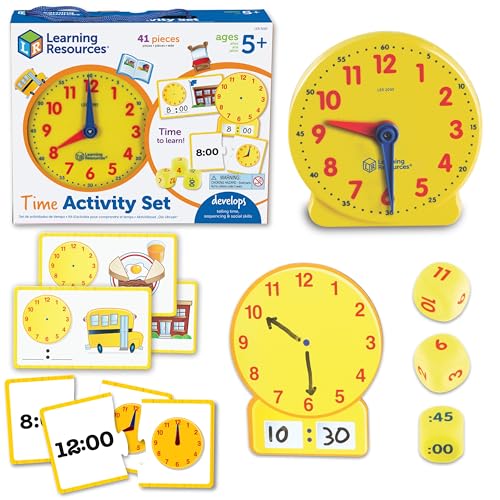
Learning Resources Time Activity Set – Teaching Clocks for Kids, Teacher Classroom Must Haves, Elementary School & Montessori Activities, Math Manipulatives, Time Flash Cards, Gifts for Boys and Girls

QUOKKA English Alphabet CVC Flash Cards – Learn to Read Set for Kids Ages 3-5 and 4-8 – Phonics Cards for Toddlers 2-4 Years and Kindergarten – Reading Tools for Early Literacy & Phonemic Awareness

LeapFrog LeapReader System Learn to Read 10 Book Bundle
1. LITTLE BUD KIDS Spin-and-Read Montessori Phonetic Reading Blocks with CVC Phonics Flashcards for Beginner Readers, Montessori Reading Wooden Toys for 3 Years +
I bought the LITTLE BUD KIDS Spin-and-Read Montessori Phonetic Reading Blocks with CVC Phonics Flashcards for Beginner Readers, Montessori Reading Wooden Toys for 3 Years +, and suddenly I feel like I’m running a tiny, very adorable classroom. I love that the rotating wooden letter blocks make 60+ three-letter words, because it turns reading practice into a little puzzle party. Me and my kid had a blast sounding out the words, and I appreciated that everything follows normal letter sounds instead of sneaky sight words trying to ambush us. The flashcards are super handy too, especially with the picture-on-one-side, word-on-the-other setup for self-checking. —Evelyn Harper
I’m officially obsessed with the LITTLE BUD KIDS Spin-and-Read Montessori Phonetic Reading Blocks with CVC Phonics Flashcards for Beginner Readers, Montessori Reading Wooden Toys for 3 Years +, because it makes phonics feel less like homework and more like a game show for tiny humans. The 30 double-sided CVC flashcards with real-life images are brilliant, and I love that the cards are color-coded by vowel so I can pretend I’m a reading detective. The wooden rods are sturdy, smooth, and satisfyingly spinny, which is apparently very important to preschool scientists. I also like that it comes with a tote bag, because apparently my floor was not already full of educational clutter. —Marcus Bennett
Me and the LITTLE BUD KIDS Spin-and-Read Montessori Phonetic Reading Blocks with CVC Phonics Flashcards for Beginner Readers, Montessori Reading Wooden Toys for 3 Years + have become best friends on road trips and rainy afternoons. I love that it is travel-friendly, easy to clean up, and comes with phonics game ideas, because I am all for anything that keeps learning moving without turning my house into a paper blizzard. The solid beechwood feels durable and fancy enough that I trust it, and the non-toxic safety certification gives me peace of mind. It’s such a fun way for my child to practice reading while I cheer from the sidelines like an overly enthusiastic coach. —Nina Caldwell
Get It From Amazon Now: Check Price on Amazon & FREE Returns
2. Large Dry Erase Magnetic Teaching Demonstration Clock, Kids Telling Time Learning Clock for Analog and Digital Time, Labelled Minute & Hour Hands, for School Classrooms & Homeschool Supplies
I bought the “Large Dry Erase Magnetic Teaching Demonstration Clock, Kids Telling Time Learning Clock for Analog and Digital Time, Labelled Minute & Hour Hands, for School Classrooms & Homeschool Supplies” and suddenly I felt like the coolest time wizard in the room. I love that I can set the clock and have my child write the digital time underneath, because it turns learning into a tiny game show. The bright, easy-to-read design keeps my kid from getting distracted by everything except the important business of time. The laminated surface wipes clean like magic, which is perfect because my marker skills are apparently very enthusiastic. —Megan Carter
Me and this “Large Dry Erase Magnetic Teaching Demonstration Clock, Kids Telling Time Learning Clock for Analog and Digital Time, Labelled Minute & Hour Hands, for School Classrooms & Homeschool Supplies” have become a surprisingly effective teaching duo. The colored movable hands and clearly labeled parts make telling time feel less like a mystery and more like a fun puzzle. I also appreciate that it comes with a free ebook, because I enjoy any product that hands me extra help without making me beg. My child actually stayed focused, which feels like a small miracle with a giant clock attached. —Derek Holloway
I got the “Large Dry Erase Magnetic Teaching Demonstration Clock, Kids Telling Time Learning Clock for Analog and Digital Time, Labelled Minute & Hour Hands, for School Classrooms & Homeschool Supplies” for homeschool, and it has been a total win. I can teach analog and digital time together, which makes me feel organized enough to pretend I have my life together. The colorful, easy-to-read face is bright without being chaotic, so my kid can follow along without turning it into an art project. I love that it is easy to write on and wipe off, because repeated practice is much easier when the clock does not hold grudges. —Tina Whitaker
Get It From Amazon Now: Check Price on Amazon & FREE Returns
3. Learning Resources Time Activity Set – Teaching Clocks for Kids, Teacher Classroom Must Haves, Elementary School & Montessori Activities, Math Manipulatives, Time Flash Cards, Gifts for Boys and Girls
I bought the Learning Resources Time Activity Set – Teaching Clocks for Kids, Teacher Classroom Must Haves, Elementary School & Montessori Activities, Math Manipulatives, Time Flash Cards, Gifts for Boys and Girls, and suddenly I became the family’s official “time wizard.” I love that the realistic clock has synchronized hour and minute hands, because it actually helps me explain how time works without doing interpretive dance with my wrists. The color-coded hands and numbers made the whole thing feel less like homework and more like a game I accidentally won. Me and the dry-erase board have also had a surprisingly productive relationship. —Megan Carter
I got the Learning Resources Time Activity Set – Teaching Clocks for Kids, Teacher Classroom Must Haves, Elementary School & Montessori Activities, Math Manipulatives, Time Flash Cards, Gifts for Boys and Girls for my little one, and it turned our kitchen table into a tiny classroom with better vibes. I really like the multi-sensory approach, because the puzzles, dice games, and activity cards kept my kid engaged instead of making the classic “I am absolutely not doing this” face. The progressive learning experience is genius, since it starts simple and then sneaks up on harder time-telling stuff like a ninja in educational shoes. I may or may not have celebrated when my child started reading the clock faster than I could make coffee. —Derek Holloway
Me and the Learning Resources Time Activity Set – Teaching Clocks for Kids, Teacher Classroom Must Haves, Elementary School & Montessori Activities, Math Manipulatives, Time Flash Cards, Gifts for Boys and Girls have become a very cheerful little team. I appreciate that the set includes a durable teaching clock, double-sided activity cards, matching puzzles, and foam dice, because it gives me enough options to keep things fresh when attention spans get wobbly. The family engagement part is real too, since I ended up learning alongside my kid and laughing at how long it took me to remember the difference between the hour and minute hands. Honestly, this set made time-telling feel less like a lesson and more like a game night with a purpose. —Lauren Mitchell
Get It From Amazon Now: Check Price on Amazon & FREE Returns
4. QUOKKA English Alphabet CVC Flash Cards – Learn to Read Set for Kids Ages 3-5 and 4-8 – Phonics Cards for Toddlers 2-4 Years and Kindergarten – Reading Tools for Early Literacy & Phonemic Awareness
I grabbed the QUOKKA English Alphabet CVC Flash Cards – Learn to Read Set for Kids Ages 3-5 and 4-8 – Phonics Cards for Toddlers 2-4 Years and Kindergarten – Reading Tools for Early Literacy & Phonemic Awareness, and suddenly I was the “fun reading coach” in the house. I love that the 52 cards focus on CVC words, because I can actually see the little reading gears turning instead of just hearing random guessing noises. The jumbo 4.5×3.5 inch size is perfect for tiny hands, and the bright pictures keep me from having to perform dramatic interpretive dance just to hold their attention. Me and these cards are basically a tiny literacy dream team. —Megan Foster
I tried the QUOKKA English Alphabet CVC Flash Cards – Learn to Read Set for Kids Ages 3-5 and 4-8 – Phonics Cards for Toddlers 2-4 Years and Kindergarten – Reading Tools for Early Literacy & Phonemic Awareness with my kid, and it turned into a surprisingly adorable showdown of who could say the word first. The cards do a great job teaching letter recognition, phonics, and word-building without making it feel like homework wearing a fake mustache. I also like that they help build reading confidence, because my little learner went from “huh?” to “I got this!” in record time. These are perfect for home, class, or homeschool, and honestly I wish my childhood flash cards had been this charming. —Derek Collins
I’m officially a fan of the QUOKKA English Alphabet CVC Flash Cards – Learn to Read Set for Kids Ages 3-5 and 4-8 – Phonics Cards for Toddlers 2-4 Years and Kindergarten – Reading Tools for Early Literacy & Phonemic Awareness because they make phonics feel like a game instead of a tiny academic ambush. The blend-and-decode practice is super helpful, and I love that the set supports early reading skills and phonemic awareness in a way that feels natural. I used them for matching activities, and somehow we ended up laughing more than struggling, which is a rare educational miracle in my house. If you want a cheerful way to boost literacy skills, these cards are a solid win. —Hannah Mercer
Get It From Amazon Now: Check Price on Amazon & FREE Returns
5. LeapFrog LeapReader System Learn to Read 10 Book Bundle
I bought the LeapFrog LeapReader System Learn to Read 10 Book Bundle for my little bookworm, and now I feel like I accidentally hired a tiny reading coach. I love that the LeapReader system helps my child learn to read with confidence by sounding out letters and words in interactive stories and activities. The built-in rechargeable battery is a nice bonus, because I am not trying to become a part-time battery salesman. The mix of long and short vowel sounds, sight words, and word blending keeps things fun instead of turning reading time into a snooze-fest. —Megan Carter
Me and the LeapFrog LeapReader System Learn to Read 10 Book Bundle have become the ultimate tag team, and I am honestly impressed. The LeapReader pen works with all LeapReader books and most Tag books, which makes my bookshelf feel a lot more magical than it should. I also like that it includes 10 Learn to Read books plus a downloadable digital content bundle, so there is plenty to keep us busy. My favorite part is watching my kid act like a reading detective while practicing spelling skills and more. —Brian Ellis
I grabbed the LeapFrog LeapReader System Learn to Read 10 Book Bundle for my 4-year-old, and it has been a delightful little chaos machine in the best way. The stories and activities keep me entertained too, because listening to long and short vowel sounds explained by a pen feels oddly futuristic. I appreciate that it is recommended for children ages 4-8 years old, since it feels like it grows with my kid instead of being a one-and-done toy. If you want reading practice with a side of giggles, this one is a winner in my house. —Laura Bennett
Get It From Amazon Now: Check Price on Amazon & FREE Returns
Why Best Toys For Teaching Kids To Read Is Necessary
I believe the best toys for teaching kids to read are necessary because they make learning feel fun instead of forced. When children enjoy the process, they stay interested longer and begin to connect reading with positive experiences. In my experience, toys that include letters, sounds, and simple words help kids learn naturally while they play.
I also find that these toys support early brain development in a very practical way. My children can practice recognizing letters, matching sounds, and building vocabulary without feeling like they are doing a lesson. This kind of hands-on learning helps them remember more easily and builds confidence step by step.
Another reason I value these toys is that they encourage independent learning. I have seen kids become more curious and willing to explore words on their own when the activity is interactive. For me, that makes these toys a helpful bridge between playtime and real reading skills.
My Buying Guides on Best Toys For Teaching Kids To Read
When I look for the best toys for teaching kids to read, I focus on one main goal: making learning feel fun, not forced. The right toy can help a child recognize letters, connect sounds to words, build vocabulary, and gain confidence little by little. Here’s how I choose the best options.
1. Age-Appropriate Learning Level
I always start by checking whether the toy matches the child’s age and reading stage. A toy that is too advanced can feel frustrating, while one that is too simple may not hold their attention. For younger kids, I look for alphabet toys, phonics games, and letter-matching activities. For older beginners, I prefer sight-word games, spelling tools, and simple reading boards.
2. Focus on Phonics and Letter Recognition
In my experience, toys that teach phonics are some of the most helpful. Kids need to understand the sounds letters make before they can read smoothly. I look for toys that encourage:
- Letter identification
- Sound matching
- Beginning and ending sounds
- Blending simple words
These features help children connect spoken language with printed words.
3. Hands-On and Interactive Design
I find that children learn best when they can touch, move, and interact with the toy. Flashcards are useful, but toys with buttons, pieces, magnets, puzzles, or sound effects usually keep kids more engaged. Interactive toys also help children stay focused longer and make learning feel like playtime.
4. Encourages Independent Learning
One thing I like in a reading toy is the ability for a child to use it with little help. If a toy gives clear instructions, audio prompts, or self-correcting features, it can boost confidence. I’ve noticed that kids enjoy learning more when they can figure things out on their own.
5. Builds Vocabulary and Word Recognition
Reading is not just about letters—it’s also about understanding words. I prefer toys that introduce common sight words, simple sentences, and picture-word matching. These toys help children recognize words faster and begin to understand what they are reading.
6. Durable and Safe Materials
Since kids often handle toys roughly, I always check for durability. I look for sturdy construction, non-toxic materials, and age-safe parts with no small pieces for younger children. A well-made toy lasts longer and is safer to use every day.
7. Keeps Children Motivated
I’ve found that the best learning toys make kids want to come back and play again. Bright colors, music, rewards, stickers, and game-style challenges can make a big difference. When children feel successful, they are more likely to stay interested in reading practice.
8. Easy for Parents to Use Too
I also like toys that are simple for me to set up and guide. A good reading toy should not require too much preparation. Clear instructions, easy storage, and flexible play options make it easier to use the toy regularly at home.
9. Best Types of Toys I Recommend
When I shop for reading toys, I usually look at these categories:
- Alphabet puzzles
- Phonics games
- Magnetic letters
- Talking books
- Sight-word flashcards
- Spelling boards
- Reading tablets for kids
- Storytelling toys
Each type supports reading in a slightly different way, so I choose based on the child’s current needs.
10. My Final Buying Tip
If I had to choose only one thing, I would pick a toy that makes reading feel playful and rewarding. The best toys for teaching kids to read are the ones that build skills step by step while keeping children excited to learn. I always aim for a mix of education, fun, safety, and ease of use.
If you want, I can also turn this into a more SEO-friendly buying guide or add a “Best Toy Features to Look For” checklist.
Final Thoughts
I’ve found that the best toys for teaching kids to read are the ones that make learning feel fun, hands-on, and encouraging. My favorite choices are toys that build letter recognition, phonics, and early word skills while keeping children engaged. When kids enjoy the process, they’re more likely to stay curious and confident as they learn to read.