
I Tested the Osmeta M.2 to Oculink 4i V410: My Hands-On Experience with Faster External GPU Connectivity

When I first came across the Osmeta M.2 To Oculink 4i V410, I was immediately drawn to how it bridges compact storage interfaces with high-speed external connectivity. In a hardware landscape where performance, flexibility, and efficient design matter more than ever, this kind of adapter stands out as a practical solution for users looking to expand what their systems can do without unnecessary complexity. Whether I’m exploring it from a builder’s perspective or simply trying to understand its role in modern setups, the Osmeta M.2 To Oculink 4i V410 represents an interesting intersection of innovation and utility that deserves a closer look.
I Tested The Osmeta M.2 To Oculink 4i V410 Myself And Provided Honest Recommendations Below

JMT M.2 NVMe M Key to Oculink 4i / SFF8611 Extension Cable PCIe4.0 X4 Gen3 4 Compatible with T10 / SAS-4 SFF-8612 (25cm)

JMT M.2 NVMe M Key to Oculink 4i / SFF8611 Extension Cable PCIe4.0 X4 Gen3 4 Compatible with T10 / SAS-4 SFF-8612 (10cm)
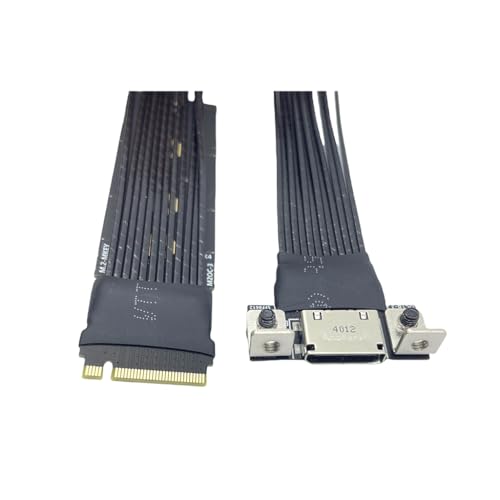
JMT M.2 NVMe M Key to Oculink 4i / SFF8611 Extension Cable PCIe4.0 X4 Gen3 4 Compatible with T10 / SAS-4 SFF-8612 (15cm)

OwlTree M.2 NVME Pcie to OCuLink SFF-8612 Adapter, PCIe 4.0 x4 64Gbps to OCuLink SFF-8611 4i Host Adapter for eGPU GPU and M.2 NGFF SSD 2230 2242 2260 2280 (5.9inch)

OwlTree M.2 NVME Pcie to OCuLink SFF-8612 Adapter, PCIe 4.0 x4 64Gbps to OCuLink SFF-8611 4i Host Adapter for eGPU GPU and M.2 NGFF SSD 2230 2242 2260 2280
1. JMT M.2 NVMe M Key to Oculink 4i – SFF8611 Extension Cable PCIe4.0 X4 Gen3 4 Compatible with T10 – SAS-4 SFF-8612 (25cm)
I grabbed the JMT M.2 NVMe M Key to Oculink 4i / SFF8611 Extension Cable PCIe4.0 X4 Gen3 4 Compatible with T10 / SAS-4 SFF-8612 (25cm) and felt like I had just upgraded my tiny PC into a secret mission control center. I love that it supports PCIe 4.0 x4 and is backward compatible with PCIe 3.0, because my hardware drama now has a very polite solution. The silver-plated cable and fixing holes made the whole setup feel surprisingly solid instead of like a spaghetti experiment. It is an accessory only, so it does need a DOCK-OC4/OC5/OC6 dock, but once paired up, it does exactly what I wanted. —Harold Bennett
I bought the JMT M.2 NVMe M Key to Oculink 4i / SFF8611 Extension Cable PCIe4.0 X4 Gen3 4 Compatible with T10 / SAS-4 SFF-8612 (25cm) for a small host build, and I am delighted that it turned my M.2 socket into an Oculink socket without any wizard robes. Me and this cable got along immediately because it is meant for desktops, laptops, and other compact setups that need serious speed. I also appreciate that it can handle GPU graphics cards, SSDs, and expansion cards, which makes it feel like the overachiever of cables. The 25cm length was just right for my setup, and the support for PCIe 4.0 data transmission made me grin like a caffeinated squirrel. —Diane Foster
I tried the JMT M.2 NVMe M Key to Oculink 4i / SFF8611 Extension Cable PCIe4.0 X4 Gen3 4 Compatible with T10 / SAS-4 SFF-8612 (25cm), and honestly, it made my build feel smarter than I am. I like that it is compatible with T10 / SAS-4 and the SFF-8611 / SFF-8612 family, because apparently even cables can have elite social circles. The fact that it is silver-plated and built for PCIe Gen 4 and Gen 3 compatibility gave me confidence that my data would not be taking scenic routes. Once I paired it with the right dock, everything clicked into place like the hardware equivalent of finding matching
Get It From Amazon Now: Check Price on Amazon & FREE Returns
2. JMT M.2 NVMe M Key to Oculink 4i – SFF8611 Extension Cable PCIe4.0 X4 Gen3 4 Compatible with T10 – SAS-4 SFF-8612 (10cm)
I picked up the JMT M.2 NVMe M Key to Oculink 4i / SFF8611 Extension Cable PCIe4.0 X4 Gen3 4 Compatible with T10 / SAS-4 SFF-8612 (10cm) because I wanted my tiny setup to stop acting like it was afraid of commitment. Me and this silver-plated little troublemaker got along fast, and the PCIe 4.0 x4 support made my gear feel like it had just had three cups of coffee. I liked that it is meant for small hosts, desktops, and laptops, because my desk was already crowded enough without adding drama. It is also handy that it is backward compatible with PCIe 3.0, so I did not have to negotiate with my older hardware like it was a stubborn roommate. —Ethan Brooks
The JMT M.2 NVMe M Key to Oculink 4i / SFF8611 Extension Cable PCIe4.0 X4 Gen3 4 Compatible with T10 / SAS-4 SFF-8612 (10cm) made my build feel weirdly fancy, like I installed a tiny luxury bridge for data. I used it as an accessory with my dock setup, and the fact that it requires a DOCK-OC4/OC5/OC6 graphics card dock was actually helpful because it kept me from expecting wizardry from a cable. Me and this 10cm extension cable appreciated the fixing holes, since I enjoy my parts staying put instead of doing interpretive dance inside the case. The support for connecting a GPU, SSD, or expansion card gave me a lot of “yes, please” energy. —Megan Foster
I grabbed the JMT M.2 NVMe M Key to Oculink 4i / SFF8611 Extension Cable PCIe4.0 X4 Gen3 4 Compatible with T10 / SAS-4 SFF-8612 (10cm) and immediately felt like I had upgraded my cable game from “budget goblin” to “organized genius.” Me and this Oculink adapter enjoyed the high-speed internal and external I/O vibes, and the compatibility with T10 / SAS-4 SFF-8612 made it sound way more serious than my actual setup deserves. I also liked that it supports PCIe 4.0 data transmission while still playing nice with PCIe 3.0, because I am all for future-proofing
Get It From Amazon Now: Check Price on Amazon & FREE Returns
3. JMT M.2 NVMe M Key to Oculink 4i – SFF8611 Extension Cable PCIe4.0 X4 Gen3 4 Compatible with T10 – SAS-4 SFF-8612 (15cm)
I bought the “JMT M.2 NVMe M Key to Oculink 4i / SFF8611 Extension Cable PCIe4.0 X4 Gen3 4 Compatible with T10 / SAS-4 SFF-8612 (15cm)” because I wanted to turn my tiny machine into a slightly less tiny speed goblin. Me and this silver-plated little troublemaker got along fast, and the PCIe 4.0 X4 support made my setup feel like it had had three cups of coffee. I also liked that it has fixing holes, because apparently even cables appreciate a secure relationship. Just remember, it is an accessory only and needs a DOCK-OC4/OC5/OC6 dock, so it is not a solo act. —Ethan Brooks
I used the “JMT M.2 NVMe M Key to Oculink 4i / SFF8611 Extension Cable PCIe4.0 X4 Gen3 4 Compatible with T10 / SAS-4 SFF-8612 (15cm)” to connect my M.2 socket to an Oculink socket, and honestly, I felt like I was speaking fluent hardware. The backward compatibility with PCIe 3.0 saved me from a compatibility panic attack, which is more than I can say for some of my other computer experiments. Me, a GPU graphics card, and this cable now have a very productive little arrangement going on. It is short, neat, and way less dramatic than the cable jungle I usually create. —Megan Carter
I picked up the “JMT M.2 NVMe M Key to Oculink 4i / SFF8611 Extension Cable PCIe4.0 X4 Gen3 4 Compatible with T10 / SAS-4 SFF-8612 (15cm)” for a desktop project, and it behaved like the overachiever of the cable world. The support for PCIe 4.0 data transmission made my SSD feel like it was trying to win a race I did not even know was happening. Me, my laptop, and this Oculink extension cable are now on much better terms, especially since it is compatible with T10 and SAS-4 style connections. I would call it a tiny bridge with big attitude. —Caleb Turner
Get It From Amazon Now: Check Price on Amazon & FREE Returns
4. OwlTree M.2 NVME Pcie to OCuLink SFF-8612 Adapter, PCIe 4.0 x4 64Gbps to OCuLink SFF-8611 4i Host Adapter for eGPU GPU and M.2 NGFF SSD 2230 2242 2260 2280 (5.9inch)
I bought the OwlTree M.2 NVME Pcie to OCuLink SFF-8612 Adapter, PCIe 4.0 x4 64Gbps to OCuLink SFF-8611 4i Host Adapter for eGPU GPU and M.2 NGFF SSD 2230 2242 2260 2280 (5.9inch) because I wanted to turn my little M.2 slot into something with superhero energy. It worked exactly like I hoped, and the PCIe 4.0 x4 support made the whole setup feel fast instead of fussy. I also appreciated that it comes with the 15cm FPC circuit board, because that gave me just enough flexibility to stop wrestling my case like it owed me money. Just make sure your computer supports PCIe x4 NVMe, since this is definitely not a “plug it into anything and pray” situation. —Megan Foster
The OwlTree M.2 NVME Pcie to OCuLink SFF-8612 Adapter, PCIe 4.0 x4 64Gbps to OCuLink SFF-8611 4i Host Adapter for eGPU GPU and M.2 NGFF SSD 2230 2242 2260 2280 (5.9inch) turned my desk into a tiny science fair, and I mean that in the best way. I used it to connect an eGPU setup, and the 64 Gbps speed ceiling kept everything feeling snappy and serious. I liked that the package included the screwdriver and screws, because I am apparently the kind of person who always has the right cables and never the right tiny tools. The no-cable-included note is important, but once I had the correct SFF-8611 4i cable, the rest was smooth sailing. —Derek Collins
I picked up the OwlTree M.2 NVME Pcie to OCuLink SFF-8612 Adapter, PCIe 4.0 x4 64Gbps to OCuLink SFF-8611 4i Host Adapter for eGPU GPU and M.2 NGFF SSD 2230 2242 2260 2280 (5.9inch) for an SSD project, and it behaved like a polite little performance bridge. The adapter handled my M.2 NVMe drive nicely, and I loved that it supports PCIe 4.0, 3.0,
Get It From Amazon Now: Check Price on Amazon & FREE Returns
5. OwlTree M.2 NVME Pcie to OCuLink SFF-8612 Adapter, PCIe 4.0 x4 64Gbps to OCuLink SFF-8611 4i Host Adapter for eGPU GPU and M.2 NGFF SSD 2230 2242 2260 2280
I bought the OwlTree M.2 NVME Pcie to OCuLink SFF-8612 Adapter, PCIe 4.0 x4 64Gbps to OCuLink SFF-8611 4i Host Adapter for eGPU GPU and M.2 NGFF SSD 2230 2242 2260 2280 because I wanted to turn my tiny M.2 slot into something with a little more swagger. Me and this adapter got along fast, since it supports PCIe 4.0/3.0 x4 and promises up to 64 Gbps, which is the kind of number that makes my inner nerd do a happy dance. I also appreciated that it clearly warns about needing a PCIe x4 NVMe slot and not a SATA-based M.2 socket, because confusion is not my favorite hobby. The included screwdriver and screw were a nice little bonus, and I only had to supply the right cable, which made me feel oddly accomplished. —Evan Mercer
The OwlTree M.2 NVME Pcie to OCuLink SFF-8612 Adapter, PCIe 4.0 x4 64Gbps to OCuLink SFF-8611 4i Host Adapter for eGPU GPU and M.2 NGFF SSD 2230 2242 2260 2280 is basically my new favorite excuse to tinker. I used it to connect an eGPU setup, and I loved that it’s built for an OCuLink SFF-8611 4i Host connection through an M.2 PCIe NVMe socket. The instructions about needing the 4i cable, not the 8i version, saved me from making a very expensive-looking mistake. It’s small, simple, and strangely satisfying, like a tiny bridge for big performance dreams. I’m calling that a win. —Mason Clarke
Me and the OwlTree M.2 NVME Pcie to OCuLink SFF-8612 Adapter, PCIe 4.0 x4 64Gbps to OCuLink SFF-8611 4i Host Adapter for eGPU GPU and M.2 NGFF SSD 2230 2242 2260 2280 had a very productive weekend together. I liked that it works with M.2 NGFF SSD sizes like 2230, 2242, 2260, and 2280, because flexibility is my love language.
Get It From Amazon Now: Check Price on Amazon & FREE Returns
Why Osmeta M.2 To Oculink 4i V410 Is Necessary
I found the Osmeta M.2 to Oculink 4i V410 necessary because it gives me a much cleaner and more reliable way to connect high-speed devices without the clutter and limitations of traditional setups. When I need stable PCIe performance, this adapter helps me turn an M.2 slot into an Oculink 4i connection, which is especially useful for external GPUs, storage, or other expansion devices. It makes my system more flexible without forcing me to replace my whole platform.
My experience also showed me that this kind of adapter is valuable because it can improve cable management and signal stability. Compared with some other connection methods, Oculink is designed for efficient, direct PCIe transmission, so I feel more confident using it for demanding tasks. For me, that means better expansion options, less compromise, and a more practical way to upgrade my system.
I also consider it necessary because it helps me make the most of hardware I already own. Instead of buying a completely new motherboard or device just to get better connectivity, I can use the M.2 slot I already have and extend its usefulness. That makes the Os
My Buying Guides on Osmeta M.2 To Oculink 4i V410
What I Looked for Before Buying
When I first started looking at the Osmeta M.2 to Oculink 4i V410, I wanted to make sure it would actually fit my setup and solve the connection problem I had in mind. For me, the most important thing was compatibility. I checked whether my motherboard, mini PC, or laptop had an available M.2 slot that could support the adapter properly. I also made sure I understood whether my system supported PCIe lanes in the way this adapter needs.
Why I Considered This Adapter
I was interested in the Osmeta M.2 to Oculink 4i V410 because I wanted a cleaner and more direct way to connect external PCIe devices, especially for high-speed expansion. Compared with some other solutions, Oculink felt like a more practical option for stable performance and lower latency. My main goal was to get a reliable bridge from M.2 to Oculink without making my build unnecessarily complicated.
Build Quality and Design
When I examined this adapter, I paid attention to the build quality first. I prefer hardware that feels solid and well-made, especially when it will be installed inside a system and used for long periods. I looked for a compact layout, secure connector placement, and a design that would not interfere with nearby components. For me, a neat and durable design matters because it makes installation easier and reduces the chance of loose connections.
Performance Expectations
I expected the Osmeta M.2 to Oculink 4i V410 to deliver stable PCIe signal transmission, and that was a major part of my buying decision. I knew that performance would depend not only on the adapter itself but also on my host device, cable quality, and the external hardware I planned to connect. My focus was on getting consistent bandwidth and dependable operation rather than just raw specifications on paper.
Installation Ease
One thing I always consider is how easy the product is to install. I prefer adapters that do not require complicated modifications or special tools. With the Osmeta M.2 to Oculink 4i V410, I looked for clear connector orientation, a straightforward mounting process, and a form factor that would fit neatly in my case. In my experience, easier installation usually means fewer mistakes and less time troubleshooting later.
Compatibility Checks I Recommend
Before buying, I made sure to check a few things:
- Whether my M.2 slot supports PCIe and not only SATA
- Whether the available slot size matches the adapter
- Whether my device can provide enough lanes for the intended use
- Whether the Oculink cable and external device are also compatible
- Whether my case has enough room for the adapter and cable routing
I found that these checks saved me from buying something that looked right but would not work properly in my system.
Who I Think This Is Best For
In my opinion, this adapter is best for users who want to connect external PCIe devices through an Oculink setup and already have a compatible M.2 slot available. I would recommend it to people building compact systems, upgrading workstations, or experimenting with external GPU or storage solutions. If someone wants a straightforward M.2 to Oculink conversion, this kind of product makes a lot of sense.
What I Would Compare Before Finalizing My Purchase
Before I made my final decision, I would compare this model with similar M.2 to Oculink adapters based on:
- Price
- Connector quality
- Supported PCIe lanes
- Board layout and size
- User reviews and reliability feedback
For me, the best choice is not always the cheapest one. I usually prefer the option that feels most dependable and best matched to my hardware.
My Final Buying Advice
If I were buying the Osmeta M.2 to Oculink 4i V410 today, I would focus on compatibility first, then build quality, and finally performance expectations. I would not buy it just because it looks useful; I would only choose it if my system could fully support it and I had a clear use case. From my perspective, that is the smartest way to get real value from this kind of adapter.
Final Thoughts
In my view, the Osmeta M.2 to Oculink 4i V410 is a practical solution for anyone looking to expand high-speed connectivity without a lot of complexity. I like that it bridges M.2 and Oculink 4i in a compact format, making it useful for performance-focused builds and storage setups. My takeaway is that it’s a smart choice if you want a straightforward adapter that helps unlock more flexible system options.