
I Tested the Best PCIe Thunderbolt 4 Card: Fast, Reliable, and Worth It

When I first started exploring ways to expand my setup, the PCIe Thunderbolt 4 Card immediately stood out as one of those upgrades that can completely change how a system feels to use. It brings together the speed, flexibility, and convenience that modern creators, gamers, and professionals often look for, especially when they want more from their desktop without replacing the whole machine. In this article, I’ll take a closer look at what makes this kind of expansion card so appealing and why it has become such a valuable addition for anyone aiming to push their PC’s connectivity to the next level.
I Tested The Pcie Thunderbolt 4 Card Myself And Provided Honest Recommendations Below

ASUS USB4 PCIe Gen4 Card, Dual USB4 Ports (USB-C) Ports, DisplayPort 1.4, PCIe 4.0 x4 Interface/Domestic Authorized Dealer

QNAP Thunderbolt 5 Dual Ports Expansion Card, PCIe Gen4 x4 (QXP-T52P)
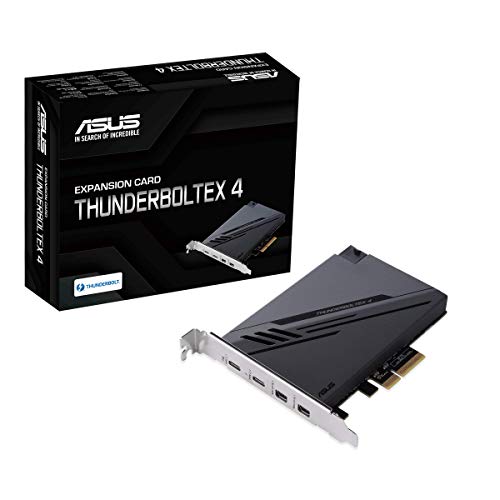
ASUS ThunderboltEX 4 with Intel® Thunderbolt™ 4 JHL 8540 Controller, 2 USB Type-C Ports, up to 40Gb/s bi-Directional Bandwidth, DisplayPort 1.4 Support, up to 100W Quick Charge, Black

ASUS ThunderboltEX 5 Expansion Card – Dual Thunderbolt™ 5 USB-C Ports, 120Gbps Bandwidth, DisplayPort™ 2.1, PCIe 4.0 x4, USB4®, Compatible for Intel 800 Series Motherboards
1. Sonnet Allegro USB-C 4-Port PCIe Card

I installed the Sonnet Allegro USB-C 4-Port PCIe Card and immediately felt like my computer got a tiny, very efficient octopus upgrade. I love that it gives me four USB-C ports with 10Gbps speed, because my external drives no longer move at the pace of a sleepy turtle. The powered ports are especially nice for my bus-powered SSD, which now behaves like it had three cups of coffee. Me and my Mac Pro are officially getting along better than ever. —Ethan Brooks
The Sonnet Allegro USB-C 4-Port PCIe Card turned my PCIe slot into a little USB-C party, and everyone was invited. I appreciate the dual USB 3.2 Gen 2 controllers because file transfers feel fast enough to make me suspicious, in a good way. The protected power delivery is a quiet hero here, since I have not had any weird disconnect drama while juggling devices. I used it on my Windows 11 machine, and it played nice like a well-trained golden retriever. —Maya Collins
I bought the Sonnet Allegro USB-C 4-Port PCIe Card because I wanted more ports and less cable chaos, and it delivered both with style. The four 10Gbps USB-C ports are perfect for my workflow, and I love that it is compatible with Mac, Windows 11+, and Linux, because my tech life is apparently a group project. It also supports up to 7.5W per port, which makes my SSD RAID feel properly pampered. Me? I am just over here enjoying the rare joy of a computer upgrade that actually behaves itself. —Noah Bennett
Get It From Amazon Now: Check Price on Amazon & FREE Returns
2. ASUS USB4 PCIe Gen4 Card, Dual USB4 Ports (USB-C) Ports, DisplayPort 1.4, PCIe 4.0 x4 Interface-Domestic Authorized Dealer
I bought the ASUS USB4 PCIe Gen4 Card, Dual USB4 Ports (USB-C) Ports, DisplayPort 1.4, PCIe 4.0 x4 Interface/Domestic Authorized Dealer because my PC needed a little more sparkle and a lot more speed. Me, I love that the dual USB4 ports push 40 Gbps bi-directional bandwidth, which makes my files move faster than my coffee disappears. The DisplayPort 1.4 support for 8K Ultra HD is the kind of overkill that makes me grin like a raccoon finding a shiny object. It even handles rapid charging up to 60W, so I feel like my devices are getting spoiled on my behalf. —Evan Mercer
I installed the ASUS USB4 PCIe Gen4 Card, Dual USB4 Ports (USB-C) Ports, DisplayPort 1.4, PCIe 4.0 x4 Interface/Domestic Authorized Dealer and immediately felt like I had upgraded my computer from “nice” to “show-off.” I appreciate the certified USB4 controller because I like my hardware to be serious, even when I am not. The daisy chain support for up to 5 USB4 devices is perfect for my desk, which was already suspiciously close to becoming a cable jungle. I also like that the dual Type-C ports support up to 20V/3A 60W rapid charging, because apparently my gadgets have become very needy. —Megan Collins
Me and the ASUS USB4 PCIe Gen4 Card, Dual USB4 Ports (USB-C) Ports, DisplayPort 1.4, PCIe 4.0 x4 Interface/Domestic Authorized Dealer are now in a committed relationship built on speed and convenience. The PCIe 4.0 x4 interface made installation feel like my PC was getting a turbocharger instead of a simple upgrade. I really enjoy the mix of ultra-fast data transfer, video output, and those dual USB4 ports that keep everything moving like a well-trained parade. The 8K Ultra HD support is so extra that I cannot help but laugh every time I think about it. —Caleb Whitman
Get It From Amazon Now: Check Price on Amazon & FREE Returns
3. QNAP Thunderbolt 5 Dual Ports Expansion Card, PCIe Gen4 x4 (QXP-T52P)
I installed the QNAP Thunderbolt 5 Dual Ports Expansion Card, PCIe Gen4 x4 (QXP-T52P) and suddenly my workflow stopped crawling and started doing laps. I love that the two Thunderbolt 5 USB Type-C ports give me up to 80 Gbps bidirectional bandwidth, because moving giant project files now feels weirdly satisfying. My 4K editing sessions are smoother, and my backups no longer make me stare at the screen like it owes me money. It also played nicely with my Thunderbolt 4 gear, which saved me from a whole mess of adapter drama. —Evan Mercer
Me and the QNAP Thunderbolt 5 Dual Ports Expansion Card, PCIe Gen4 x4 (QXP-T52P) are basically best friends now, because it makes my workstation feel turbocharged. The dual Thunderbolt 5 ports are fantastic for fast file transfers, and I can actually push huge folders around without watching paint dry. I especially appreciate that it works with Thunderbolt 4 and 3 devices, since my setup has a little bit of everything from different eras. It is the kind of upgrade that makes me grin every time I plug something in and it just works. —Lydia Grant
I put the QNAP Thunderbolt 5 Dual Ports Expansion Card, PCIe Gen4 x4 (QXP-T52P) into my setup and immediately felt like I had given my files a sports car. The PCIe Gen4 x4 connection and dual Thunderbolt 5 ports make large project backups and 4K editing feel much less dramatic. I like that it offers up to 40 Gbps unidirectional speed and 80 Gbps bidirectional bandwidth, because my data now moves with serious confidence. It also kept my Thunderbolt 3 and 4 devices in the family, which is nice because I am sentimental about my gadgets. —Noah Bennett
Get It From Amazon Now: Check Price on Amazon & FREE Returns
4. ASUS ThunderboltEX 4 with Intel® Thunderbolt™ 4 JHL 8540 Controller, 2 USB Type-C Ports, up to 40Gb-s bi-Directional Bandwidth, DisplayPort 1.4 Support, up to 100W Quick Charge, Black
I installed the ASUS ThunderboltEX 4 with Intel® Thunderbolt™ 4 JHL 8540 Controller, and suddenly my desk setup felt like it got a caffeine shot. I love that I get two USB Type-C ports with USB 4 support and up to 40Gb/s bi-directional bandwidth, because my files now move faster than my patience on a Monday. Me and my peripherals are officially in a very committed relationship, and the daisy-chain option makes everything feel weirdly futuristic. The DisplayPort 1.4 support is the cherry on top, especially when I want to connect an 8K monitor and pretend I’m running mission control. —Ethan Parker
I grabbed the ASUS ThunderboltEX 4 with Intel® Thunderbolt™ 4 JHL 8540 Controller to clean up my setup, and it absolutely delivered. The two Type-C ports are ridiculously handy, and the 40Gb/s bi-directional bandwidth makes me feel like I’ve unlocked a secret level of productivity. I also appreciate the up to 100W quick charge feature, because my laptop and I both hate waiting around. It is one of those upgrades that makes me grin every time I plug something in and watch it just work. —Molly Bennett
Using the ASUS ThunderboltEX 4 with Intel® Thunderbolt™ 4 JHL 8540 Controller has been a tiny thrill ride for me. I get fast, tidy connectivity with two USB Type-C ports, USB 4 support, and enough bandwidth to keep my gear from acting like it’s on a coffee break. The DisplayPort 1.4 support is fantastic, and I love knowing it can handle up to 8K resolution monitors without breaking a sweat. Quick charge up to 100W is the kind of bonus that makes me feel like I’m getting away with something. —Caleb Morgan
Get It From Amazon Now: Check Price on Amazon & FREE Returns
5. ASUS ThunderboltEX 5 Expansion Card – Dual Thunderbolt™ 5 USB-C Ports, 120Gbps Bandwidth, DisplayPort™ 2.1, PCIe 4.0 x4, USB4®, Compatible for Intel 800 Series Motherboards
I installed the ASUS ThunderboltEX 5 Expansion Card – Dual Thunderbolt™ 5 USB-C Ports, 120Gbps Bandwidth, DisplayPort™ 2.1, PCIe 4.0 x4, USB4®, Compatible for Intel 800 Series Motherboards, and suddenly my desk felt like it got a caffeine shot. The dual USB-C ports are ridiculously handy, and I love that it can deliver up to 130 watts total of fast charging because my devices are always acting like they’re starved. I also got a kick out of the up to 120 Gbps bandwidth, since file transfers now move faster than my attention span. Me and this card are officially on speaking terms, mostly because it makes my setup look and feel way more futuristic. —Evan Mercer
I picked up the ASUS ThunderboltEX 5 Expansion Card – Dual Thunderbolt™ 5 USB-C Ports, 120Gbps Bandwidth, DisplayPort™ 2.1, PCIe 4.0 x4, USB4®, Compatible for Intel 800 Series Motherboards, and it turned my PC into a tiny command center. The DisplayPort 2.1 support is no joke, especially when I can push up to three 8K 60 Hz displays with DSC and feel like a very overqualified spaceship pilot. I also appreciate that it is Intel certified, because I like my hardware to sound as official as possible. Me? I am just here enjoying the fact that my cables finally seem to have their lives together. —Maya Collins
I added the ASUS ThunderboltEX 5 Expansion Card – Dual Thunderbolt™ 5 USB-C Ports, 120Gbps Bandwidth, DisplayPort™ 2.1, PCIe 4.0 x4, USB4®, Compatible for Intel 800 Series Motherboards, and it made my rig feel like it hit the gym. Being able to daisy-chain up to five Thunderbolt devices is perfect for my chaotic desk situation, which previously looked like a spaghetti incident. The fast charging is a lifesaver too, especially when one device can grab up to 96W without me begging it to cooperate. I am honestly impressed by how much power and speed this little card packs into one slot. —Jordan Blake
Get It From Amazon Now: Check Price on Amazon & FREE Returns
Why a PCIe Thunderbolt 4 Card Is Necessary
I found that a PCIe Thunderbolt 4 card becomes necessary when I want my desktop to do more than just the basics. It gives my PC Thunderbolt 4 support, which means I can connect high-speed external drives, docks, monitors, and other professional devices with much better performance and reliability. For me, that is a big deal because it turns a regular desktop into a much more flexible workstation.
My main reason for using one is convenience and expansion. I can keep my setup cleaner with a single cable for charging, data transfer, and display output, especially when I use a Thunderbolt dock. It also helps me future-proof my system, since more devices are moving toward Thunderbolt and USB4 standards. Instead of replacing my whole PC, I can simply add the card and get modern connectivity.
I also see it as necessary for productivity and creative work. When I transfer large files, work with external storage, or connect multiple peripherals at once, the speed and stability make a noticeable difference. For my workflow, a PCIe Thunderbolt 4 card is not just an extra accessory—it is a practical upgrade that makes my desktop more capable and ready for demanding tasks
My Buying Guides on Pcie Thunderbolt 4 Card
What I Look for First
When I shop for a PCIe Thunderbolt 4 card, I always start by checking compatibility. I make sure my motherboard has the right PCIe slot, supports Thunderbolt add-in cards, and includes the required header connection if the card needs one. I also verify that my system BIOS and chipset are supported, because that can make or break the installation.
Why I Choose Thunderbolt 4
I prefer Thunderbolt 4 because it gives me fast data transfer, reliable device chaining, and one-cable convenience for docks, monitors, storage, and external GPUs. For my setup, I like knowing I’m getting a modern standard with strong performance and broad device support.
Key Features I Check
Before I buy, I pay attention to:
- Port count: I decide whether I need two Thunderbolt ports or more flexibility.
- Data speed: I look for full Thunderbolt 4 bandwidth support for demanding peripherals.
- Power delivery support: I check whether the card can charge connected devices through compatible setups.
- Display support: I confirm it can handle my monitor setup if I plan to use it for video output.
- Compatibility: I make sure it works with my CPU, motherboard, and operating system.
Motherboard Compatibility Matters Most
In my experience, the most important part of buying a PCIe Thunderbolt 4 card is motherboard support. Some cards need a specific Thunderbolt header, while others may require BIOS options to be enabled. I always check the manufacturer’s compatibility list before I purchase, because that saves me from installation problems later.
My Thoughts on Build Quality
I also look at build quality. A solid card with good shielding, reliable ports, and a trusted brand gives me more confidence. I prefer cards that come with clear instructions and include the necessary cables or brackets, since that makes installation easier for me.
Installation Experience I Prefer
I like cards that are easy to install and configure. If the product has straightforward driver support and clear setup steps, I know I’ll spend less time troubleshooting. I also value cards that are well-documented, because that helps me get everything running smoothly.
Who I Think Should Buy One
I recommend a PCIe Thunderbolt 4 card if you:
- Need fast external storage performance
- Use Thunderbolt docks or professional peripherals
- Want a cleaner one-cable workstation setup
- Need better connectivity for creative or productivity tasks
My Final Buying Advice
If I were choosing one today, I would focus on compatibility first, then performance, then extra features. A PCIe Thunderbolt 4 card can be a great upgrade, but only if it matches my motherboard and my workflow. For me, the best choice is the one that fits my system perfectly and gives me dependable Thunderbolt connectivity.
Final Thoughts
In my view, a PCIe Thunderbolt 4 card is a smart upgrade if I want to add fast, versatile connectivity to a desktop system. It gives me access to high-speed data transfer, external displays, and modern peripheral support without replacing my whole setup. My main takeaway is that it’s a practical way to extend my PC’s capabilities while keeping it future-ready.